
How to Choose Wardrobe Doors That Work for Your Space
Learn how to choose the right doors for your modular wardrobe. Compare hinged, sliding, bi-fold and pocket doors, along with popular wardrobe door finishes.
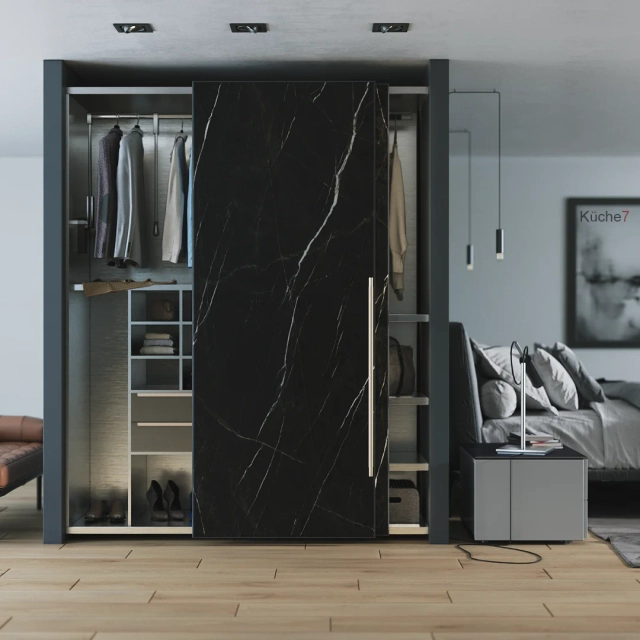
Choosing the right wardrobe doors can feel overwhelming once you start looking into it. A wardrobe is one of the biggest pieces of furniture in your bedroom, and its doors are crucial in shaping how the entire space looks and functions.
You can choose from hinged, sliding, bi-fold and pocket doors. Each type offers its own mix of style, space-saving, and ease of use. Picking the right one for your home can make everyday life that much easier.
In this guide, we'll take you through the main types and finishes for wardrobe doors, so that you can find one that suits your room and your taste.
Types of Wardrobe Doors
The first question is how you want the doors to open, since that changes how much space the wardrobe actually needs around it.
1. Hinged Doors
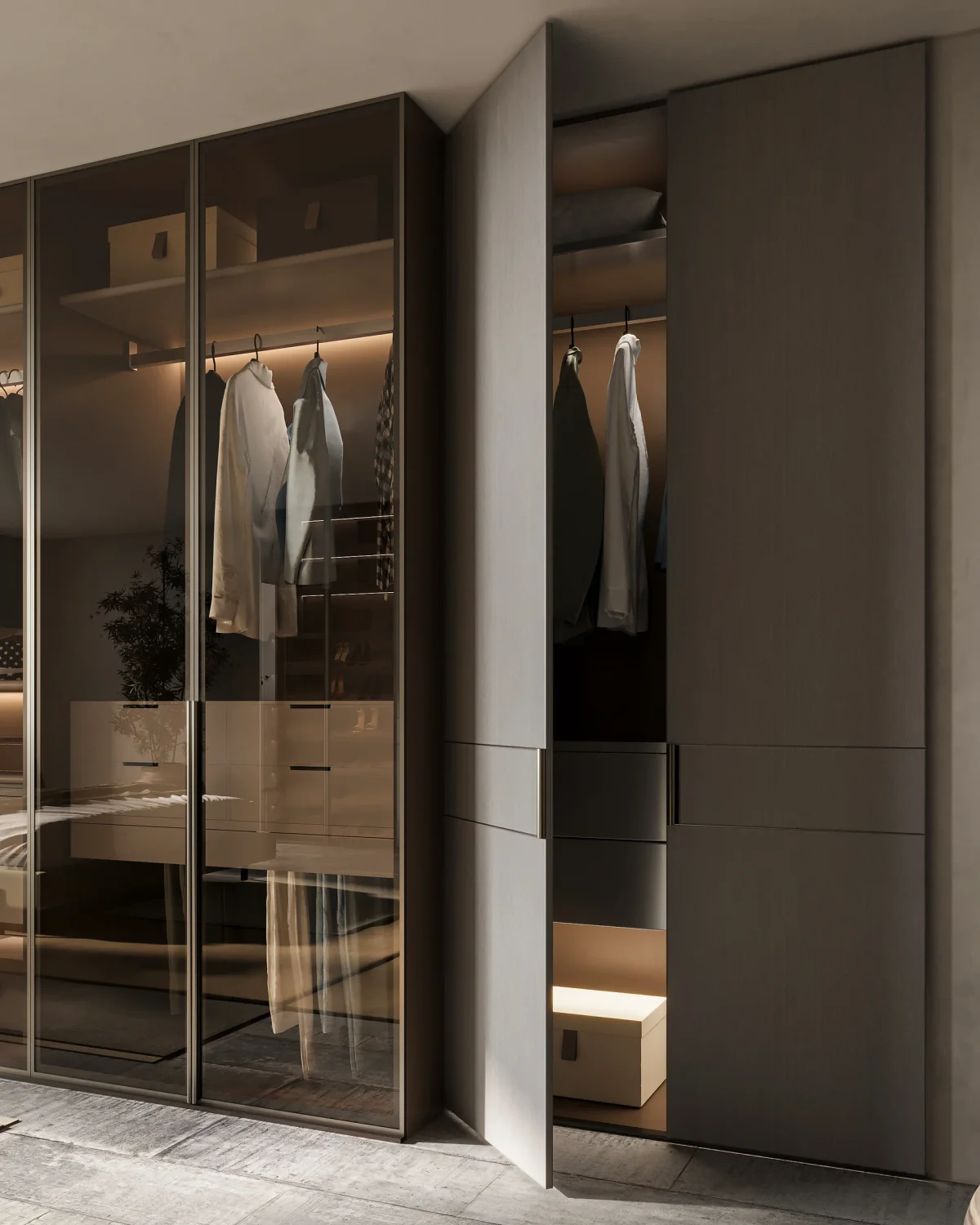
These are the doors most people grew up with. They're fixed to the frame and swing outward, and when they're open you can see the whole wardrobe in one go.
The catch is clearance. You need enough room in front of the doors to swing without hitting a bedframe or a dresser, so it's worth measuring everything before you commit to it.
Hinged doors also give you the most room to play around when it comes to design: colour, texture, glass, mirror, whatever style you're after.
Hinged doors tend to suit people who:
- Have decent clearance in front of their wardrobe
- Want the whole interior visible at once
- Would rather not deal with tracks or folding panels
- Care about having several options on the door design
2. Sliding Doors
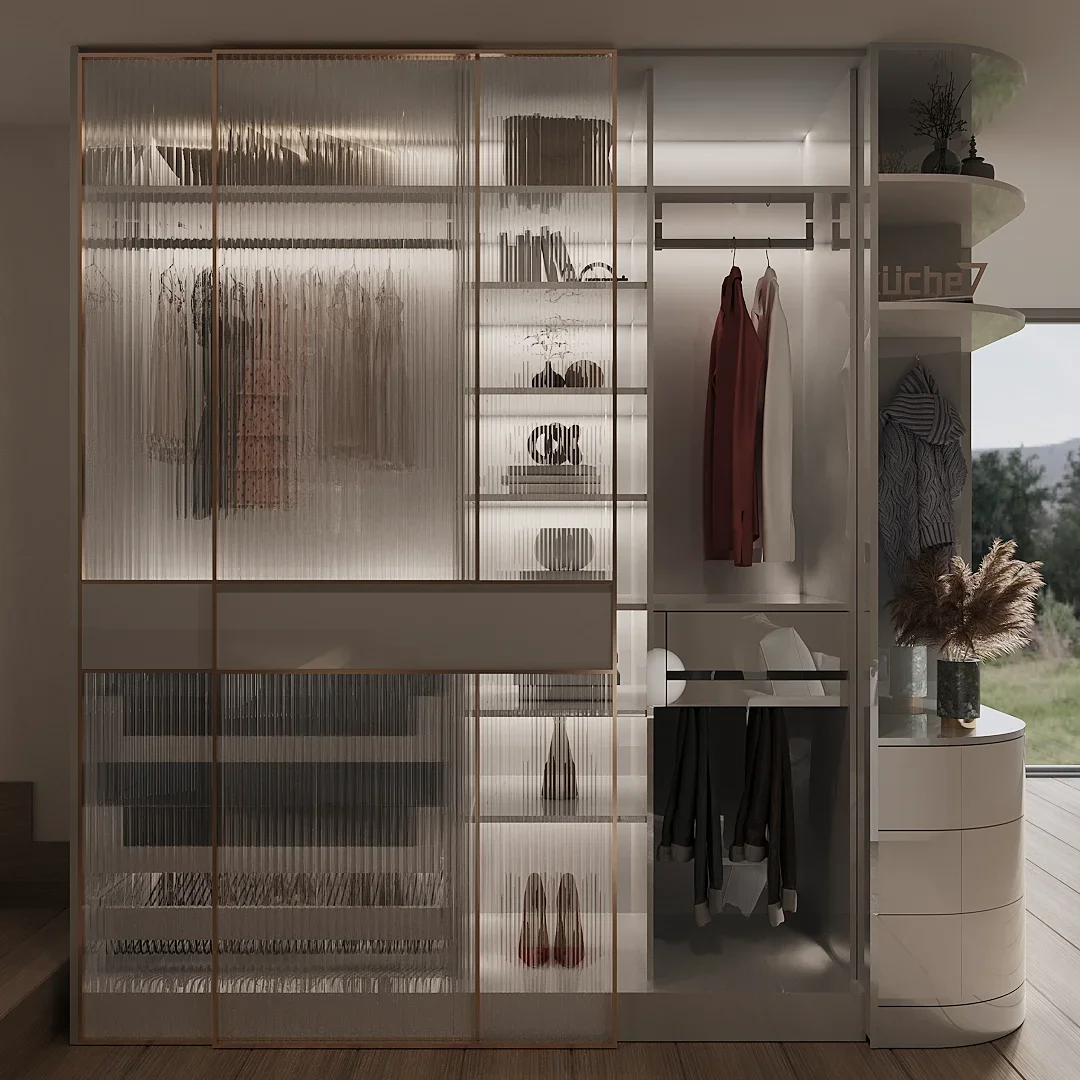
Sliding doors run on a track and move sideways instead of swinging out, so they never leave the wardrobe's footprint. That's a serious advantage if your bedroom is on the smaller side.
You can also run large panels across the whole width for a cleaner, more continuous look.
The downside is that you can only see one section of the wardrobe at a time. Since the panels overlap, part of the wardrobe will always be hidden behind the doors.
Sliding doors tend to suit people who:
- Are working with a limited floor space
- Want to avoid anything swinging into the room
3. Pocketing Doors
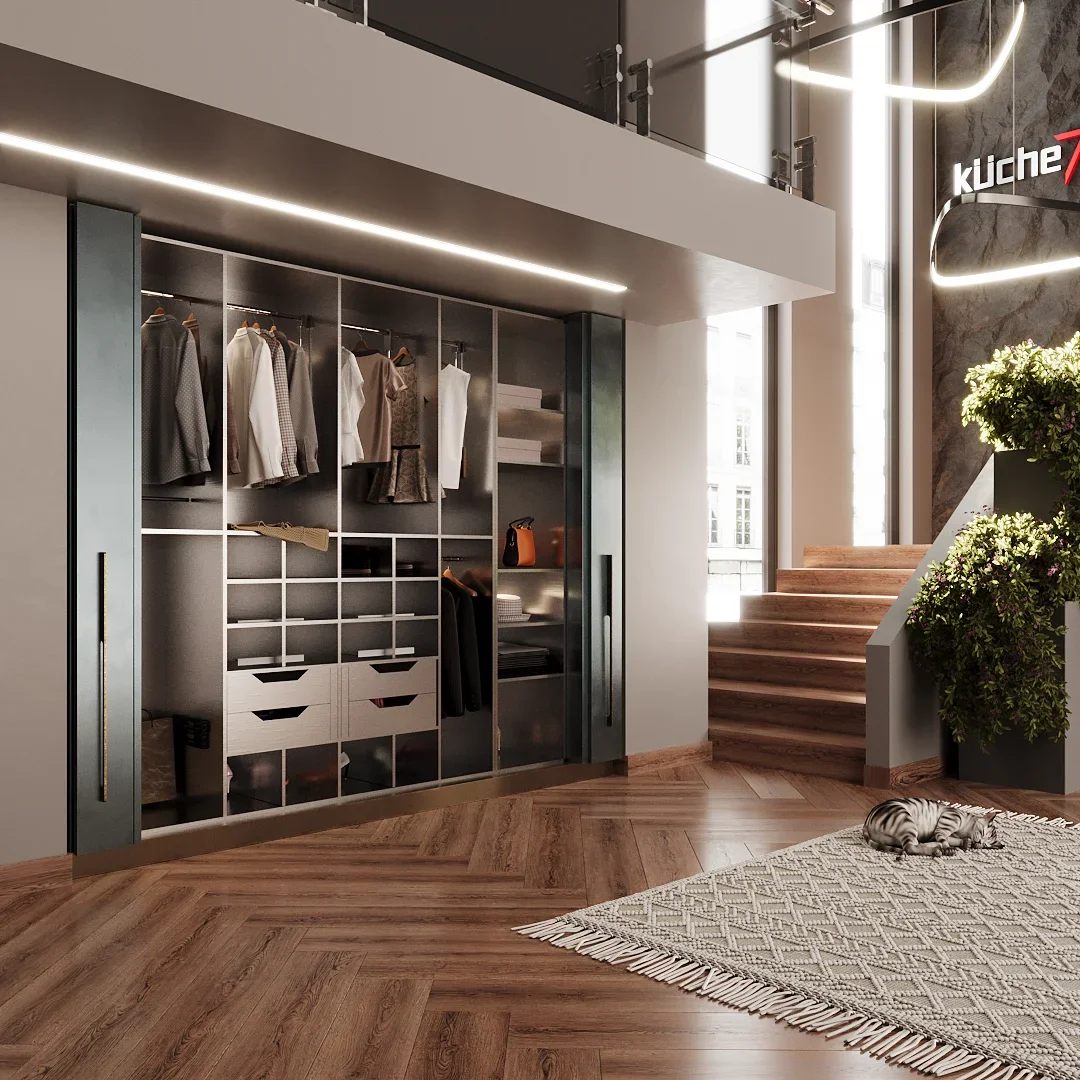
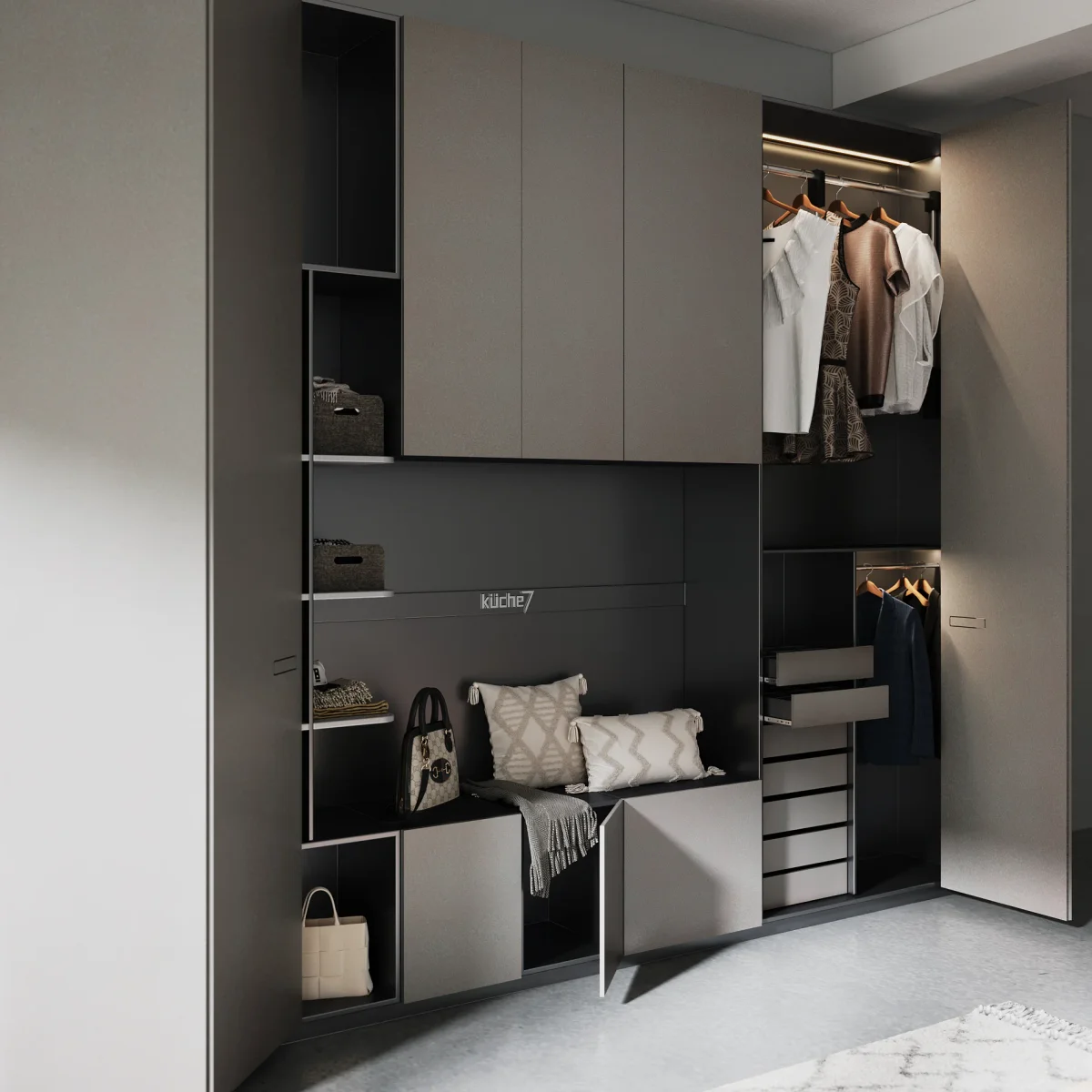
These slide right into the wall or a side cavity when opened, so they disappear completely rather than sitting in front of the wardrobe.
They're not something you can just add on later, though. The pocket space has to be built into the wall or cabinetry from the start.
Worth considering if:
- You want the doors gone entirely when opened
- You're after a minimal look with no visible hardware
4. Bi-Fold Doors
Bi-fold panels hinge together and fold as they open, landing somewhere between hinged and sliding in terms of both access and space needed.
They're a decent option when a full hinged door won't fit but a sliding system feels too restrictive.
Worth considering if:
- Clearance is tight but you still want good access
- Folding panels don't bother you aesthetically
Wardrobe Door Styles and Finishes
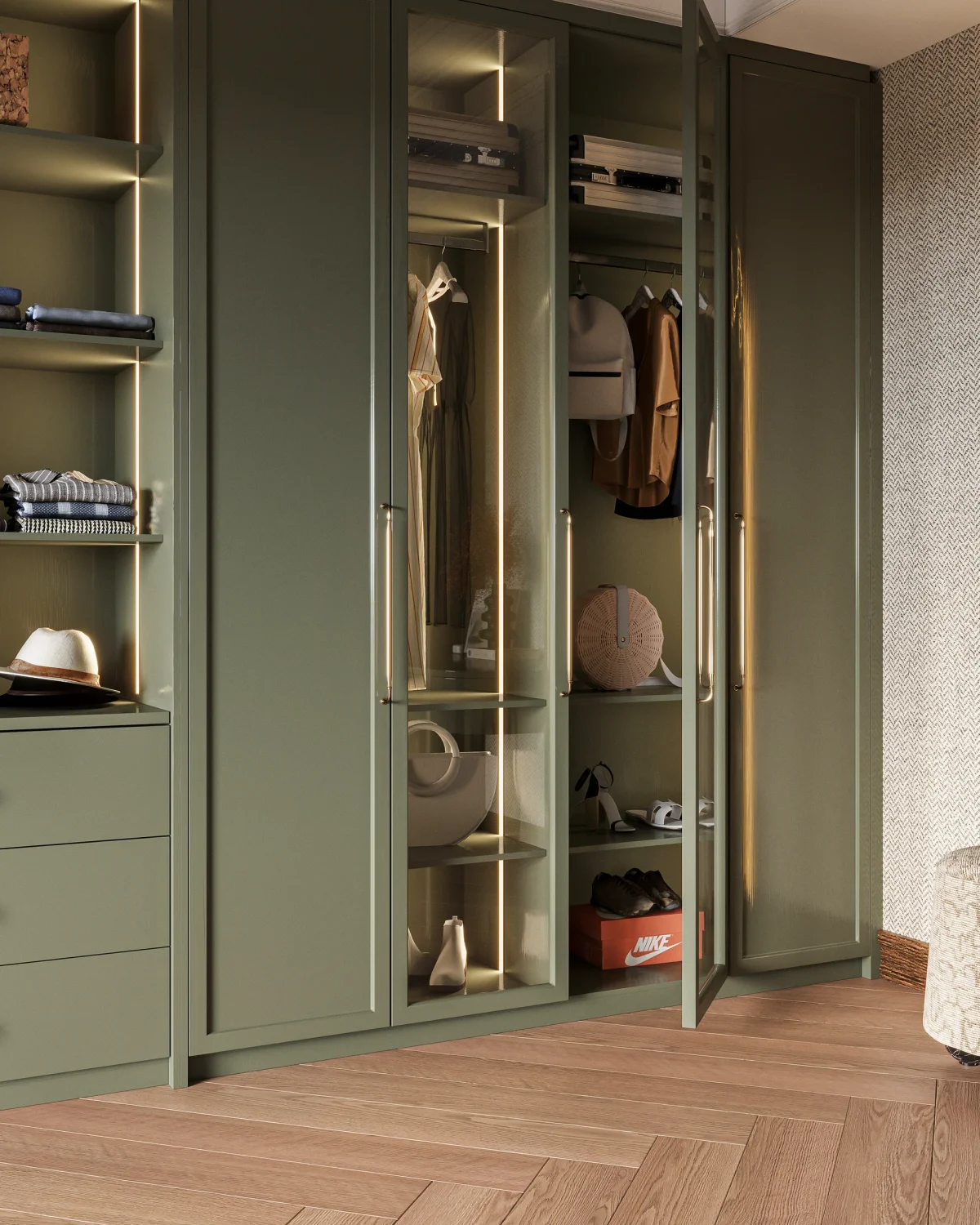
Once the opening system is sorted, the finish is really about how the wardrobe looks and feels day to day.
It's worth remembering that the same door mechanism can look completely different depending on what surface you put on it. A hinged door in raw timber and a hinged door in glossy lacquer are the same system doing two very different jobs.
1. Textured and Special Finishes
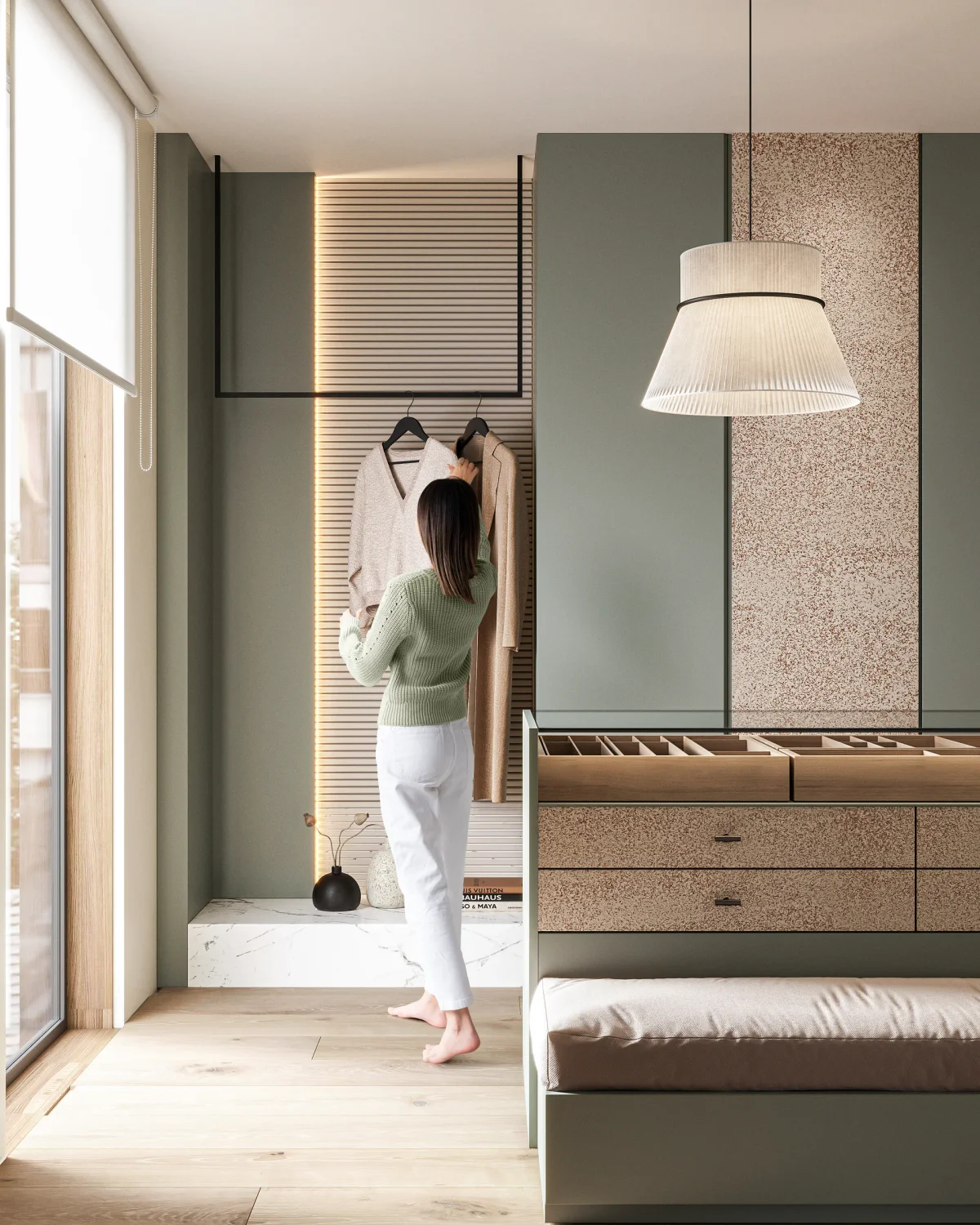
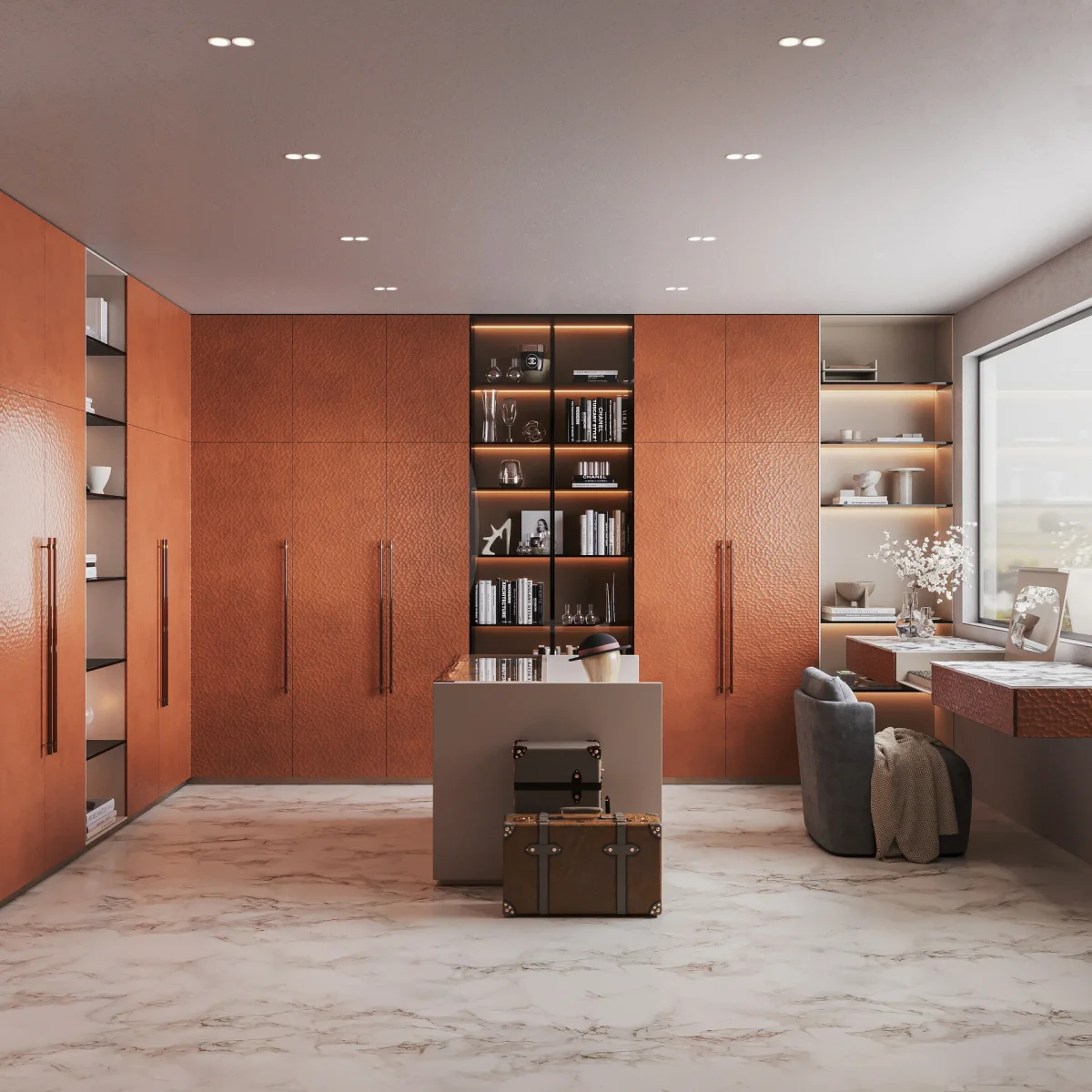
Texture adds depth without needing extra decoration on top. Some finishes are barely noticeable up close; others are the whole point of the design. It all depends on your preference and style.
There's usually a wide range of colours and finishes to pick from, which makes it easier to fit the wardrobe into the room rather than have it sit there looking like a separate piece of furniture.
If you want the room to feel calm, stick with neutral tones and subtle texture. If you'd rather the wardrobe stand out, a darker colour or a more obvious texture will do that.
2. Glass Doors
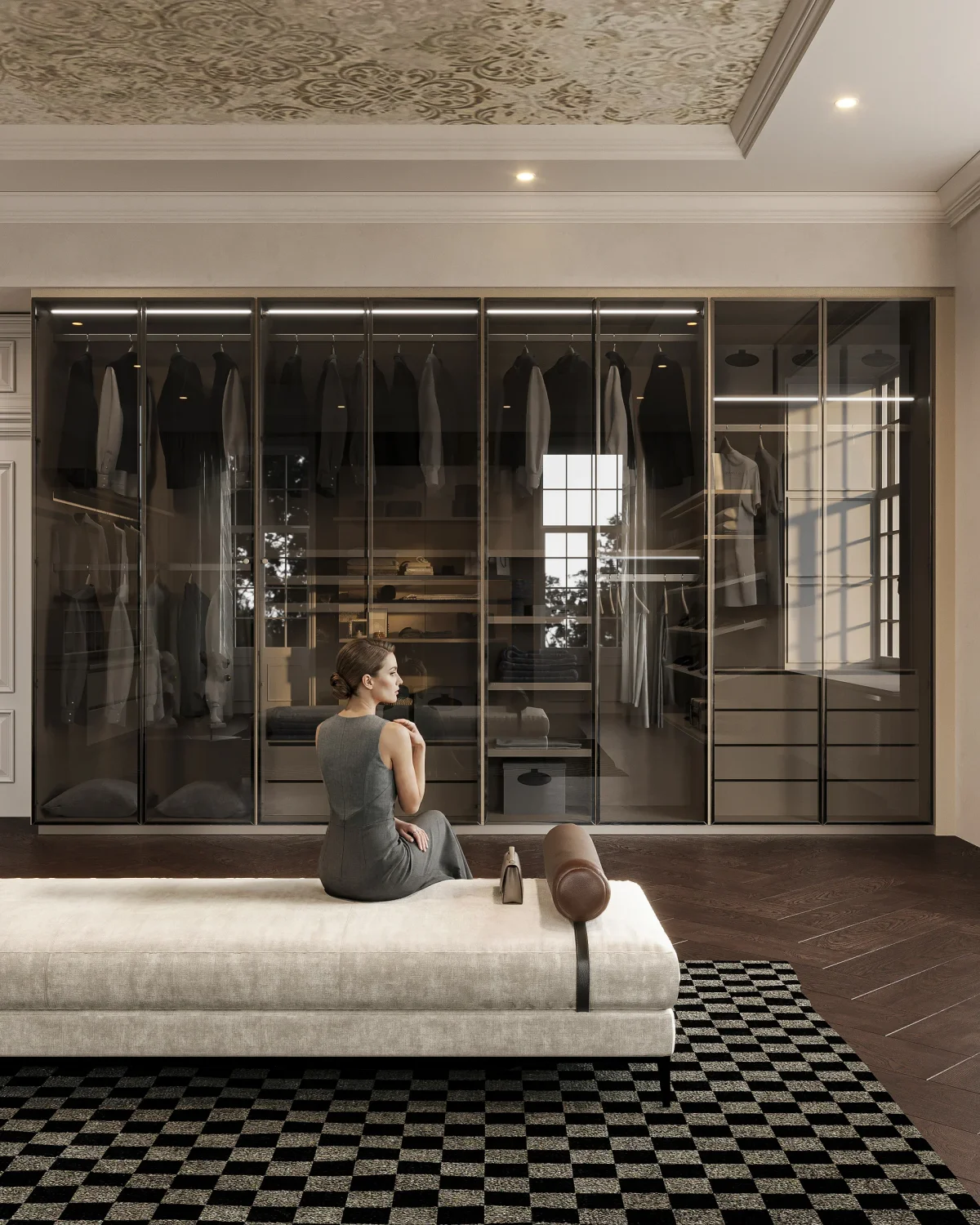
Glass tends to make a wardrobe feel lighter and less heavy in the room, particularly when it's used on a few panels rather than the whole thing.
Clear glass shows what's inside. Frosted or tinted glass hides it while still keeping that lighter look.
One thing to know going in: glass shows fingerprints and dust more than most other finishes, so it definitely needs a bit more maintenance.
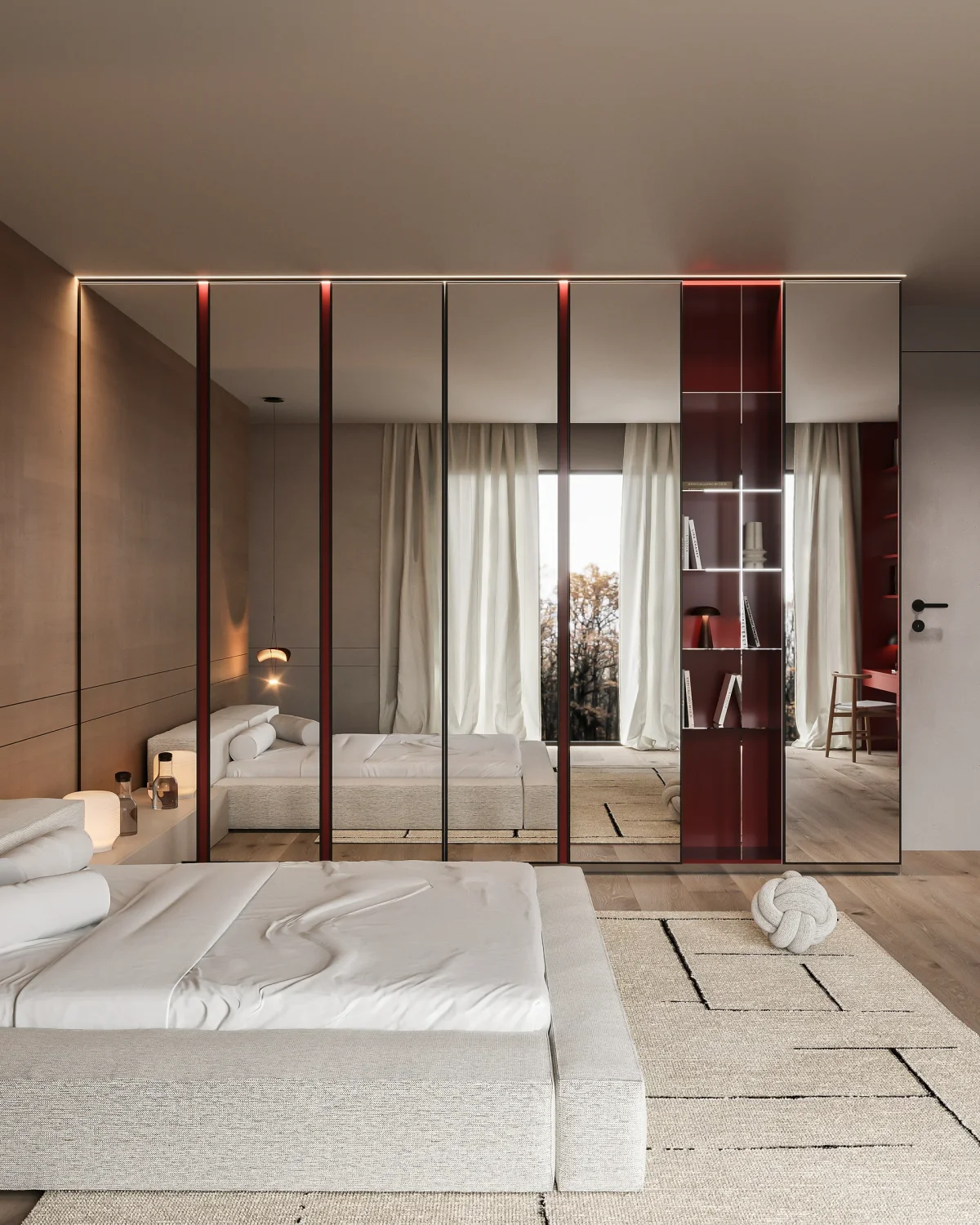
3. Mirrored Doors
Mirrored doors solve two problems at once: they finish the wardrobe and give you a full-length mirror, without needing a separate one somewhere else in the room.
They also bounce light around, which can make a room feel bigger than it is. That's especially useful in smaller bedrooms.
You don't have to mirror the entire door either. Some people mix mirror panels with other finishes rather than having a full-mirrored wardrobe. It's really up to your preference.
How to Choose the Right Wardrobe Doors
It really comes down to three things: how much space you have, how you want to access the wardrobe, and how you want it to look.
Start by measuring the clearance space in front of the wardrobe and checking what furniture sits nearby. If space is tight, sliding is usually the more sensible choice over hinged.
Then think about access. Hinged doors show you everything at once. Sliding doors show you one section at a time. Bi-fold and pocketing doors land somewhere in between, depending on how they're set up.
The finish is really the last decision, and it's more about taste than function. Texture, glass, and mirror all do different things to how the wardrobe feels in the room, but none of them affect how it opens.
At the end of the day, the "best" door isn't the one that photographs well. It's the one that fits how your room is laid out and how you actually get dressed every morning.
Frequently Asked Questions
1. What are the main types of wardrobe doors?
Hinged, sliding, pocketing, and bi-fold. The main difference between them is how much space each one needs to open.
2. Are sliding doors better for small bedrooms?
Generally, yes. Since they don't swing into the room, they leave the floor in front of the wardrobe clear, which matters a lot in a tighter space.
3. Do hinged doors give better access than sliding doors?
If you want the whole interior visible at once, hinged doors do that. Sliding doors only expose one section at a time, so it depends on how you use your storage day to day.
4. Can wardrobe doors have textured finishes?
Yes, there's usually a broad range of colours, textures, and special finishes available depending on the manufacturer. Kuche7's stainless steel modular wardrobes come in a range of 25000 finishes.
5. Are glass wardrobe doors practical?
They can be. They're good if you want a lighter look, though frosted or tinted glass is worth considering if you'd rather not display the contents of your wardrobe all the time.
6. What are the benefits of mirrored wardrobe doors?
You get a built-in full-length mirror and extra light in the room, which is really handy if you don't want to fit a separate mirror somewhere else.
7. Should you choose the door type or finish first?
Door type first, mainly because it's driven by the space you have. Once that's settled, the finish becomes a much easier decision.