
Kitchen Dado Options: Types, Materials & Ideas for Your Kitchen Backsplash
Explore the best kitchen dado options, from glass and quartz to ceramic tiles and mosaic. Compare materials, costs, and design trends to pick the right one.
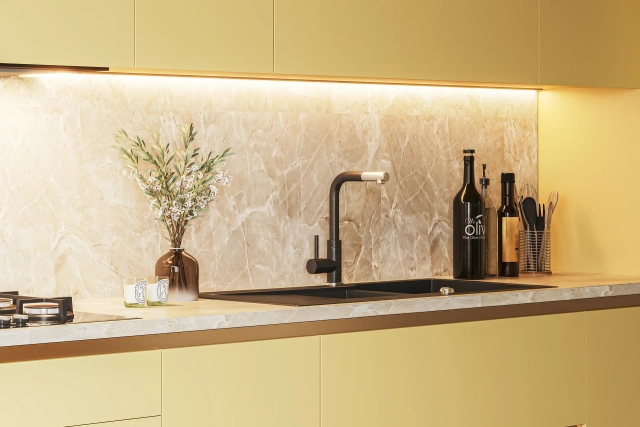
The area between your kitchen countertop and wall cabinets, commonly known as the “dado” or backsplash, is one of the most functional yet overlooked design elements in a kitchen. It protects your walls from oil splashes, stains, and moisture while also being a great opportunity to add colour, texture, and personality to your kitchen. In this guide, we’ll explore the most popular kitchen dado options, their pros and cons, and how to choose the right one for your space.
What Is a Kitchen Dado?
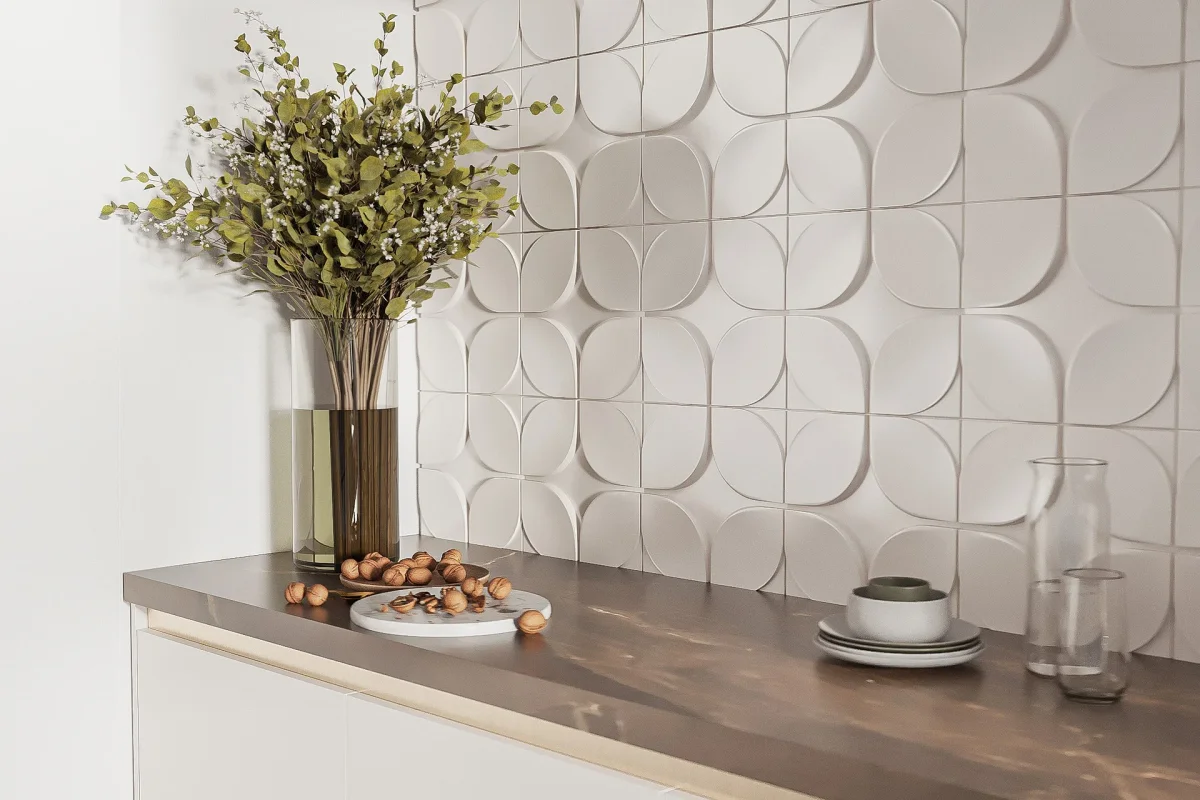
The kitchen dado refers to the wall cladding installed between the countertop and the overhead cabinets, typically covering the cooking and sink zones. It serves two main purposes: protecting the wall from daily wear (grease, water, stains) and enhancing the overall look of the kitchen.
Why Choosing the Right Dado Matters
- Protects walls from heat, oil splashes, and moisture damage
- Easy to clean and maintain, especially near the hob and sink
- Adds visual contrast to cabinets and countertops
- Increases durability of the kitchen in high-use areas
- Boosts resale value with a polished, finished look
Popular Kitchen Dado Options
1. Ceramic Tiles
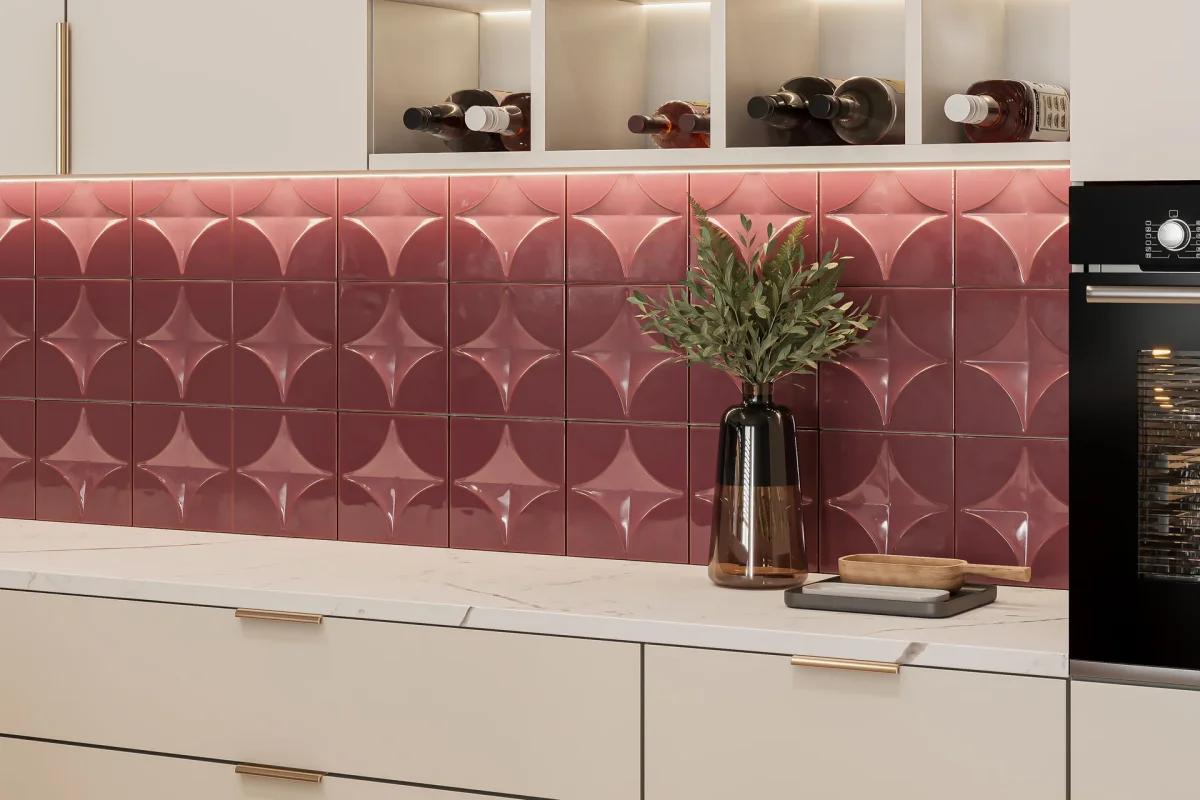
One of the most widely used and affordable dado options. Ceramic tiles come in countless colours, patterns, and sizes, making them easy to match with any kitchen theme.
– Pros: Budget-friendly, easy to install, wide design variety
– Cons: Grout lines can trap grease and require regular cleaning
2. Glass Dado
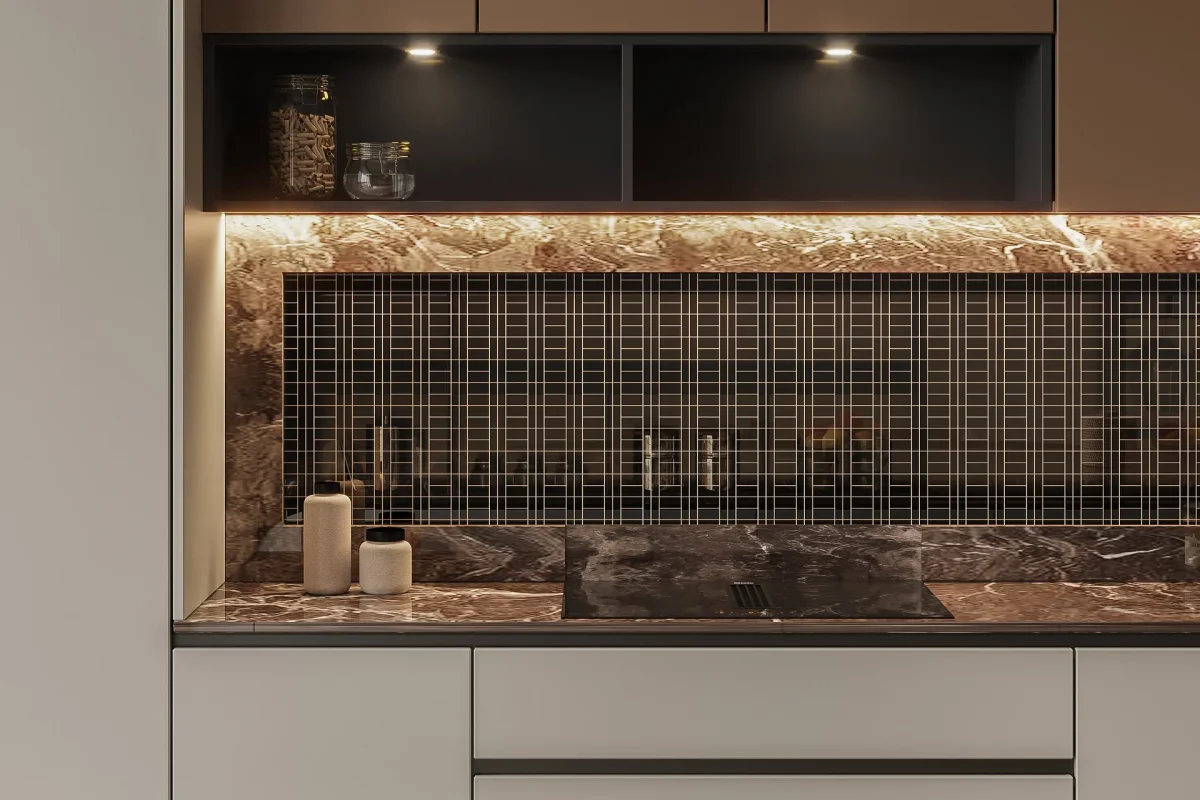
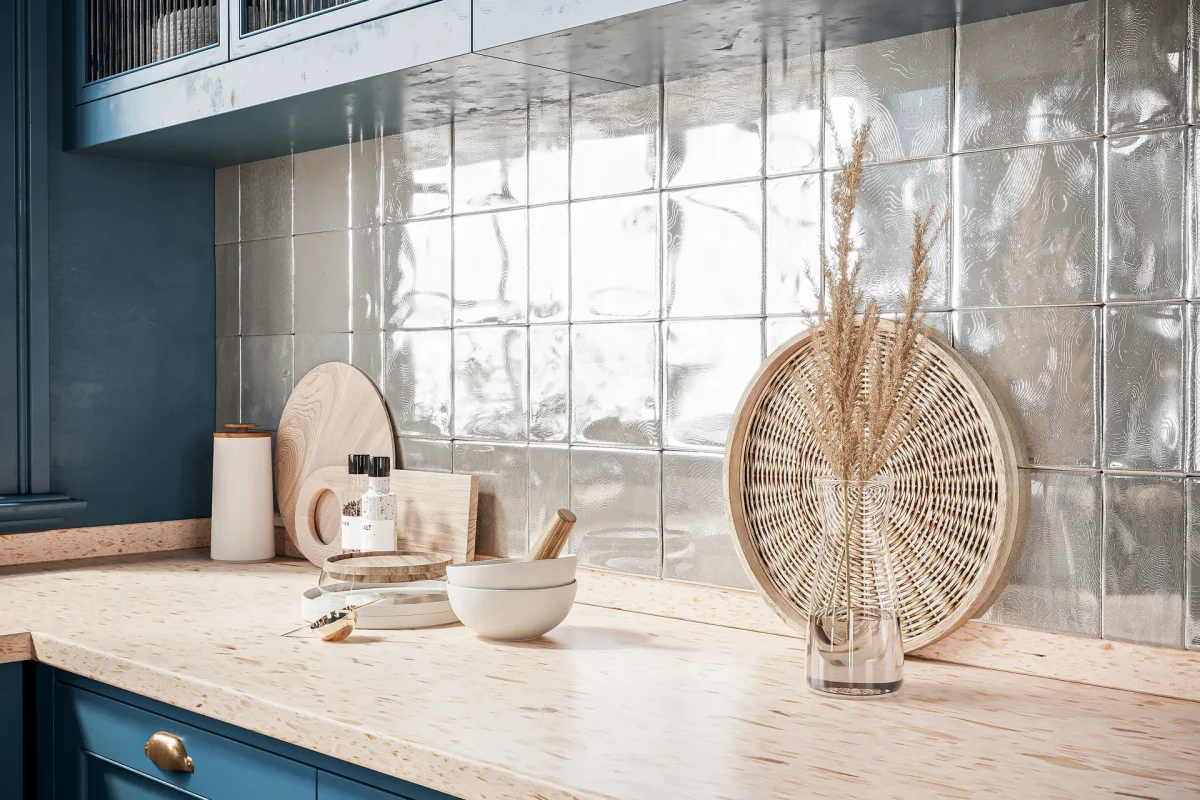
Toughened glass panels (plain, frosted, or printed with digital designs) have become extremely popular in modern modular kitchens for their sleek, seamless look.
– Pros: No grout lines, easy to wipe clean, modern aesthetic, can be customised with digital prints
– Cons: Higher cost, prone to visible fingerprints and smudges
3. Quartz or Granite Dado
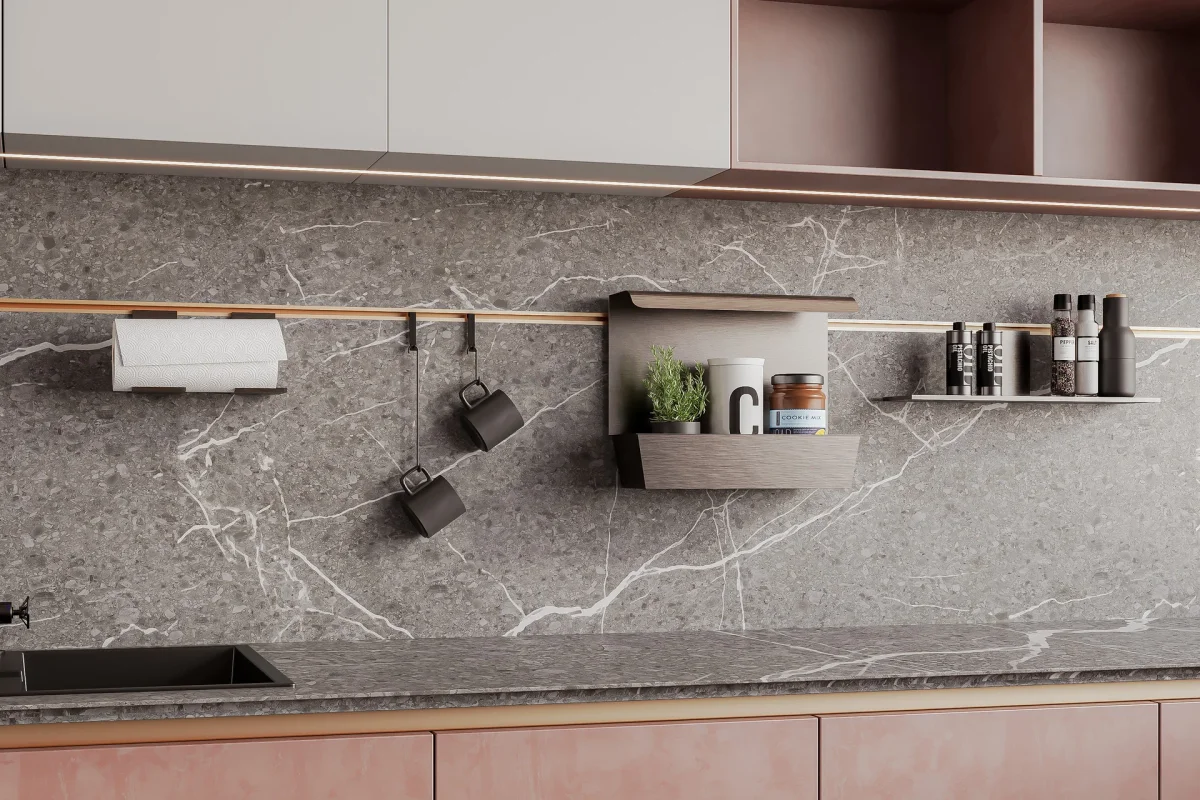
Using the same material as the countertop for the dado creates a seamless, luxurious, monolithic appearance.
– Pros: Extremely durable, heat- and stain-resistant, elegant continuous look
– Cons: Expensive, heavier installation requiring professional handling
4. Mosaic Tiles
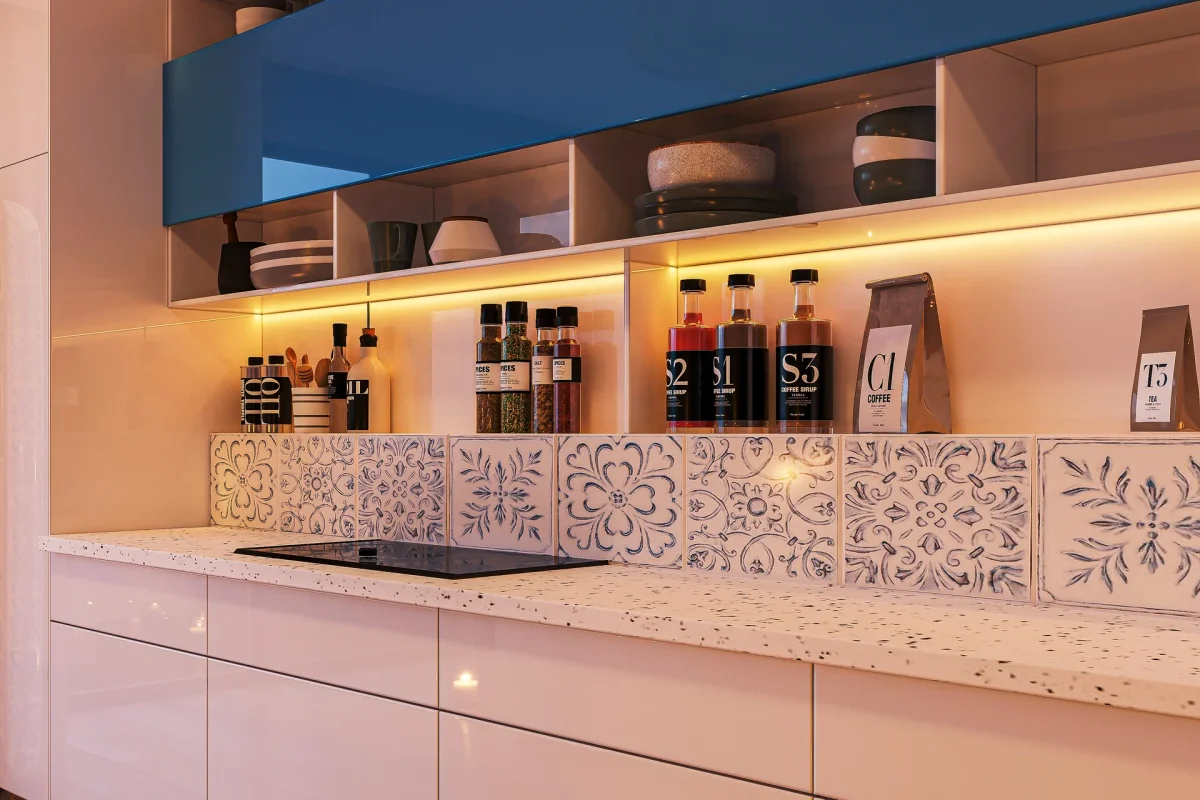
Small tiles arranged in patterns, often used to create a focal point behind the hob or sink area.
– Pros: Highly decorative, great for accent walls, wide range of designs
– Cons: More grout lines mean more maintenance and can look busy in small kitchens
5. Stainless Steel Dado
A practical option often seen in commercial kitchens, now gaining popularity in modern homes for its industrial, minimalist look.
– Pros: Extremely hygienic, heat-resistant, easy to clean
– Cons: Shows fingerprints and scratches, limited design flexibility
6. Magnetic Dado
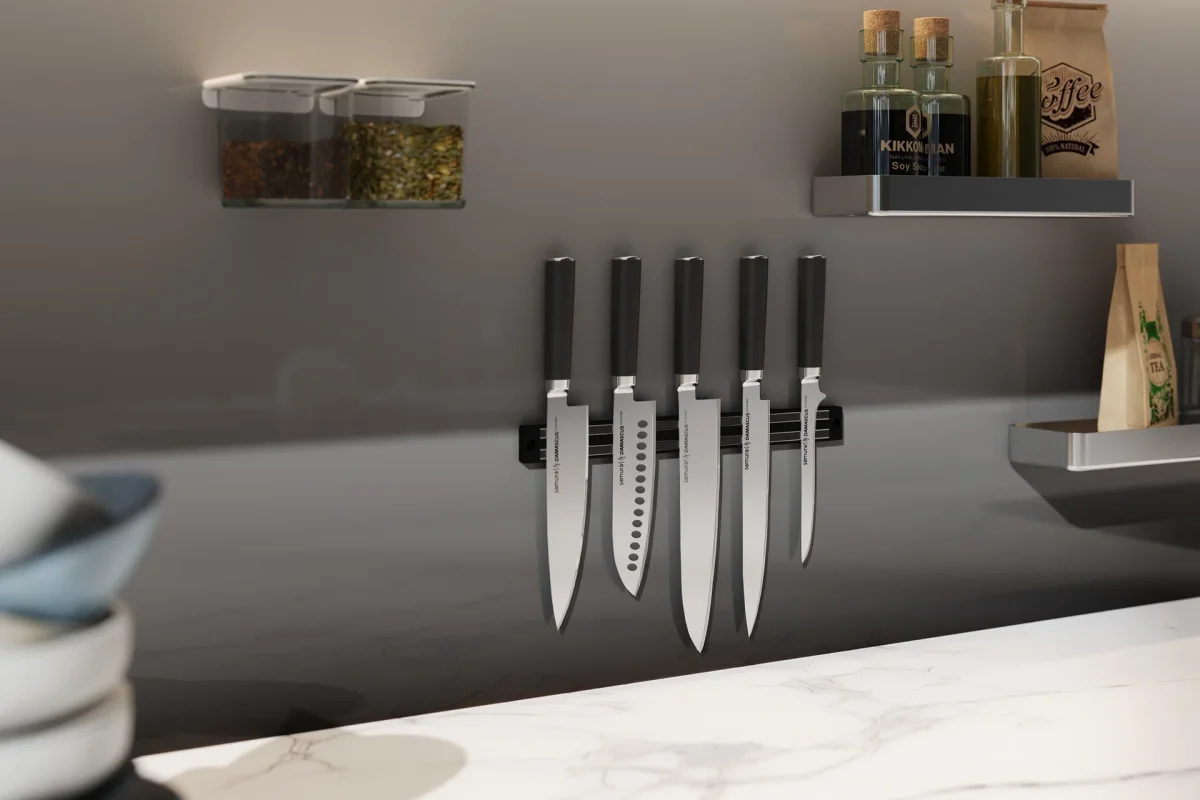
A functional, modern option gaining popularity in smart kitchens, magnetic dado panels (usually steel-backed sheets finished with PU) let you attach magnetic hooks, spice racks, knife holders, and utensil organisers directly onto the wall, keeping countertops clutter-free.
Pros: Highly functional, maximises storage without extra shelving, customizable with magnetic accessories, easy to clean
Cons: Higher cost than standard tiles, limited color/finish options compared to glass or tile, requires magnetic-compatible accessories
7. Onyx Dado
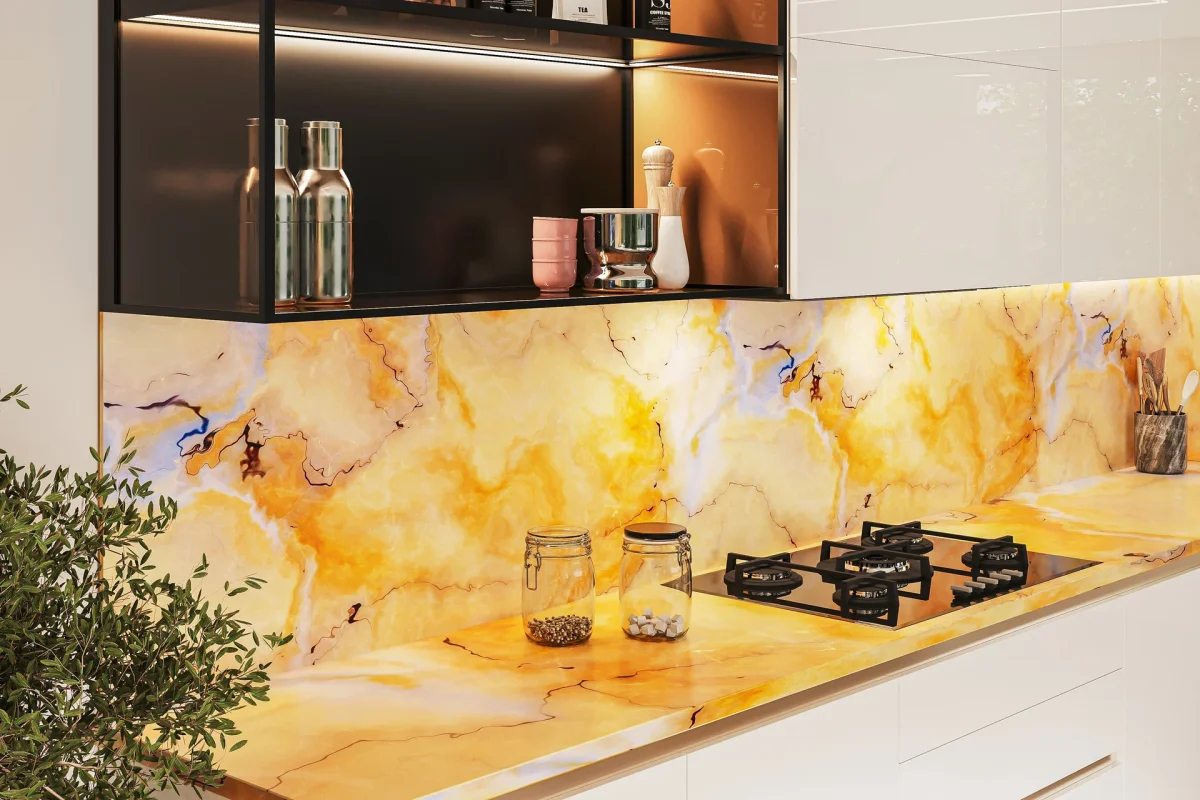
A premium, statement-making natural stone option, onyx is prized for its translucency; when backlit with LED lighting, it creates a stunning glowing effect, making it a favourite for luxury kitchen designs.
Pros: Striking natural veining, unique translucent glow when backlit, adds a luxurious, high-end appearance
Cons: Very expensive, porous and requires sealing, delicate and prone to cracking, needs professional installation
How to Choose the Right Dado for Your Kitchen
- Consider your budget – Ceramic tiles are cost-effective, while quartz and glass are premium choices.
- Match your kitchen theme – Glass suits modern/minimalist kitchens, while mosaic and stone suit classic or traditional styles.
- Think about maintenance – If you cook frequently with oil and spices, go for low-maintenance options like glass or quartz.
- Check durability near the hob – Areas directly behind the stove should use heat-resistant materials.
- Get design continuity – Matching the dado with your countertop or cabinet colour creates a cohesive, high-end look.
Latest Trends in Kitchen Dado Design
- Digital printed glass with floral, geometric, or marble-effect patterns
- Large-format slabs that minimise joints and grout lines for a seamless finish
- Contrasting dado colours against neutral cabinets for a bold statement look
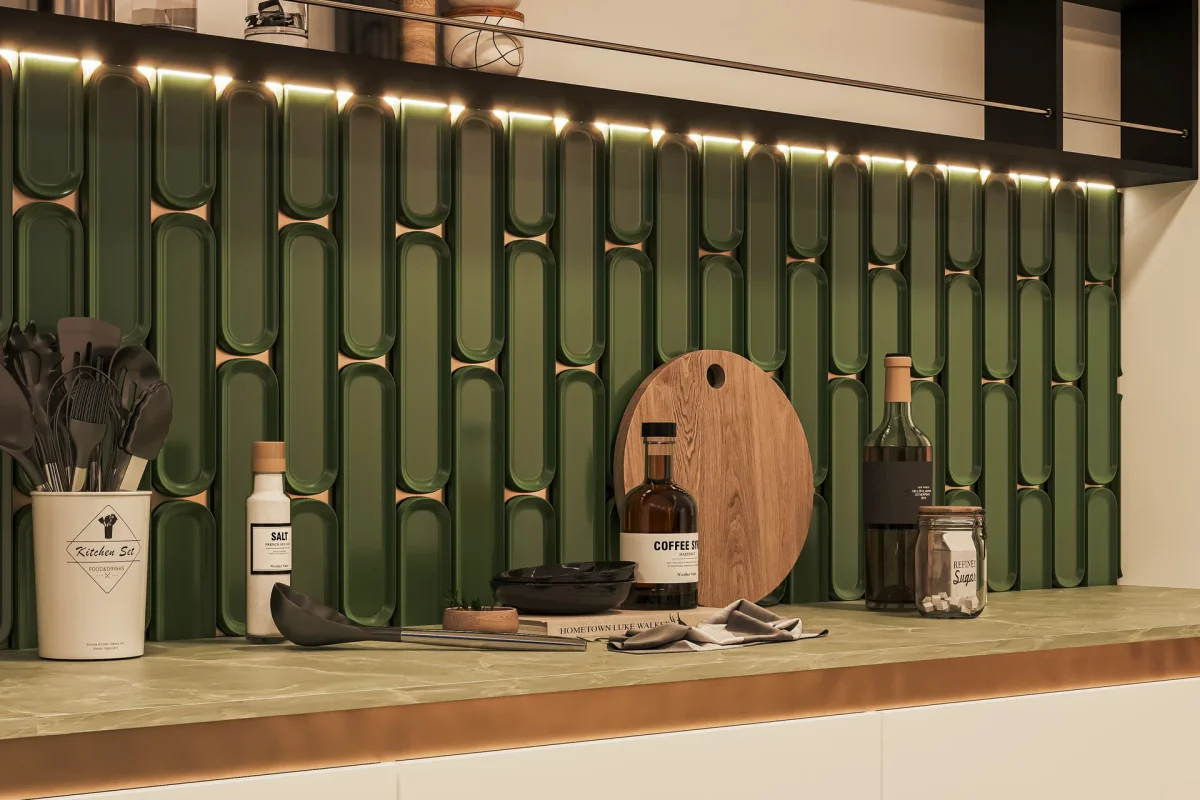
- Textured 3D tiles for added depth and visual interest
- Magnetic dado panels for smart, accessory-friendly storage solutions
- Backlit onyx dado for a luxurious, glowing statement wall
Conclusion
Your kitchen dado is more than just a protective wall covering; it’s a design statement that ties your entire kitchen together. From budget-friendly ceramic tiles to luxurious quartz slabs, there’s a dado option for every style and budget. Choose a material that balances durability, ease of maintenance, and aesthetic appeal to get the most out of your kitchen for years to come.
Frequently Asked Questions (FAQs)
1. What is the best material for a kitchen dado?
Glass and quartz are considered among the best due to their durability, seamless finish, and ease of cleaning, though ceramic tiles remain popular for their affordability.
2. What is the standard height of a kitchen dado?
The typical dado height ranges between 24 to 30 inches, covering the space between the countertop and the bottom of the wall cabinets.
3. Is glass or tile better for a kitchen backsplash?
Glass offers a seamless, easy-to-clean, modern look with no grout lines, while tiles are more budget-friendly and offer greater design variety, though they require more maintenance.
4. Can I use the same material for the countertop and dado?
Yes, using matching quartz or granite for both the countertop and dado creates a seamless, high-end, monolithic appearance that is increasingly popular in modern kitchens.
5. How do I clean a kitchen dado?
Most dado materials like glass, quartz, and stainless steel can be cleaned with a mild detergent and soft cloth, while tile grout may need occasional deep cleaning with a grout cleaner.
6. Is a dado necessary in a modular kitchen?
Yes, a dado is highly recommended, as it protects the wall behind the countertop from oil, water, and stains, significantly extending the life of your kitchen walls.
7. What is the cost of installing a kitchen dado?
Costs vary based on material; ceramic tiles and laminate panels are the most economical, while glass, quartz, and granite dados are on the higher end of the price range.
8. Which dado material is best for small kitchens?
Glass or acrylic dados work well in small kitchens, as their seamless, reflective surface creates an illusion of more space compared to heavily patterned tiles.
9. What is a magnetic dado and how does it work?
A magnetic dado is a steel-backed wall panel installed behind the countertop that allows you to attach magnetic hooks, racks, and holders directly onto the wall, offering extra storage without drilling or additional shelving.
10. Is onyx a good material for a kitchen dado?
Onyx creates a stunning, luxurious look, especially when backlit, but it is porous, expensive, and delicate compared to quartz or granite, so it’s best suited for low-impact accent areas rather than heavy-use zones near the hob.