
Best Materials for Modular Kitchen Cabinets Explained
Discover the best kitchen cabinet material for your home. Explore modular kitchen cabinet materials, kitchen finishes materials, cabinet types of material, kitchen top materials, and what is best for durability and design.
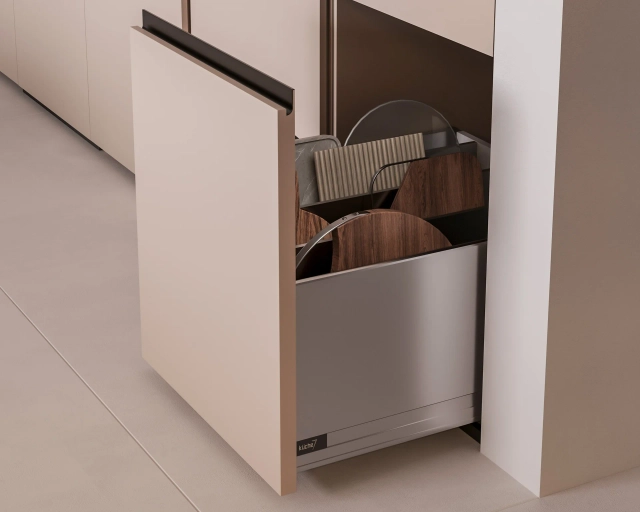
If you’re planning a modular kitchen, one decision affects everything, your modular kitchen cabinet material.
Not just how the kitchen looks, but:
- How long it lasts
- How it handles water, heat, and daily use
- How much maintenance it needs
There’s no single “best” material.
Each one solves a different problem.
Let’s break down the kitchen cabinet types of material clearly so you can choose based on performance, not just appearance. We’ll give you the kitchen raw material list along with their pros and cons, you can choose from which one works best for you. It doesn’t matter which one is the most popular kitchen cabinet material if it doesn’t work for you.

What Matters When Choosing Kitchen Materials
Before comparing kitchen top materials names, understand what a kitchen actually goes through:
- Constant moisture (sink, cleaning)
- Heat (cooking area)
- Weight (utensils, storage)
- Daily usage (open/close cycles)
So the right kitchen cabinet door material should handle:
- Strength
- Moisture resistance
- Durability
- Workability (design flexibility)

1. Plywood (Most Common Choice)
What It Is
Plywood is made by bonding thin layers of natural wood veneers in alternating directions. This cross-layer structure gives it strength.
Where It Works Best
- Base cabinets
- Sink areas (if BWP grade)
- Full kitchen setups
Advantages
- Strong and durable
- Good moisture resistance (especially BWP grade)
- Excellent screw holding for hardware
- Long lifespan under normal use
Limitations
- Not completely waterproof
- Quality varies by brand
- Slightly more expensive than MDF or particle board
Best For
Most Indian kitchens where durability and balanced performance are needed.
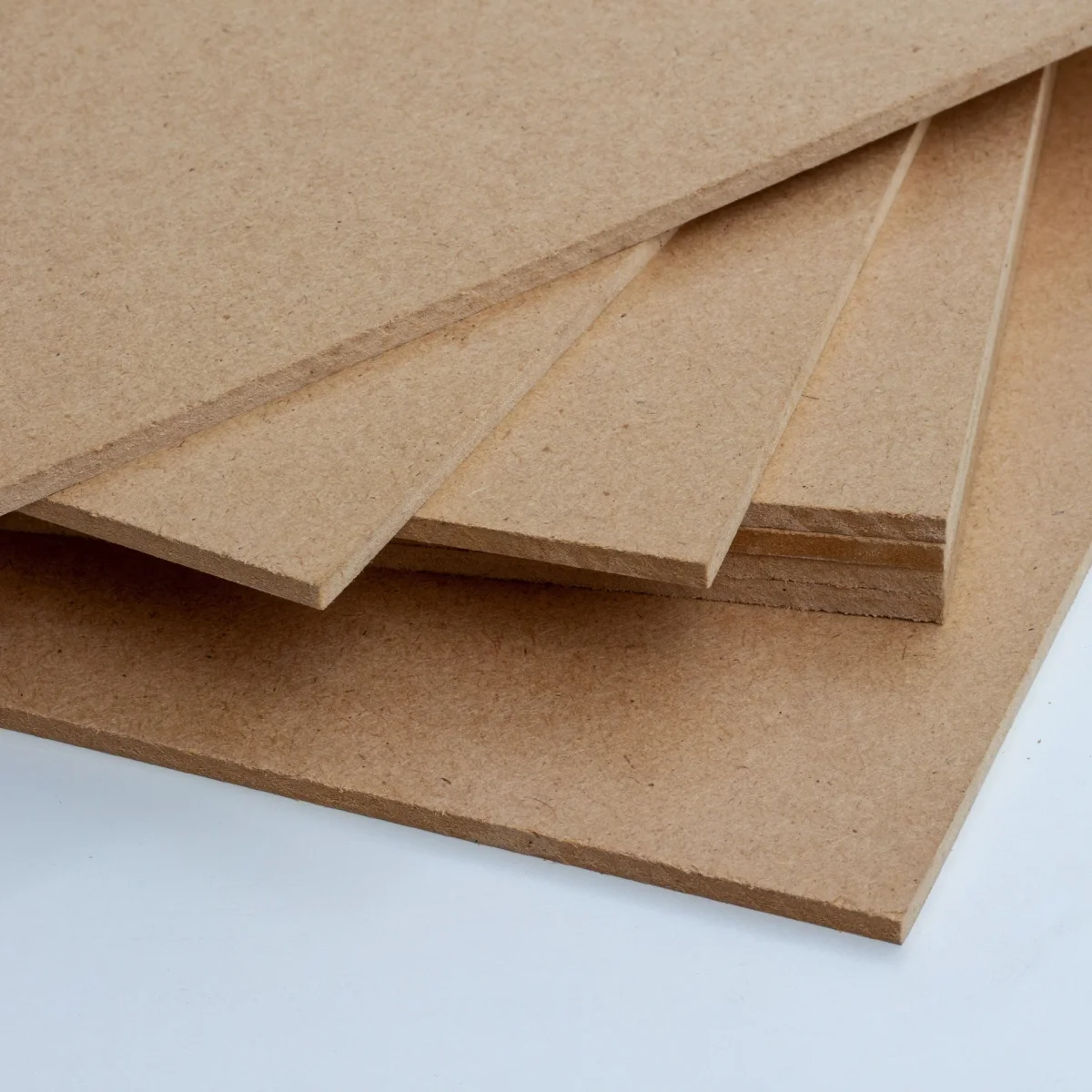
2. MDF / HDF (Smooth Finish Material)
What It Is
Made from fine wood fibers mixed with resin and compressed under high pressure. HDF is denser than MDF.
Where It Works Best
- Cabinet shutters
- Decorative panels
- Dry areas
Advantages
- Smooth, uniform surface
- Ideal for painted finishes (PU, membrane)
- Good for detailed designs and routing
- Cost-effective for front-facing elements
Limitations
- Poor moisture resistance
- Can swell if exposed to water
- Lower screw holding strength than plywood
Best For
Shutters and design-heavy kitchens where finish matters more than structure.
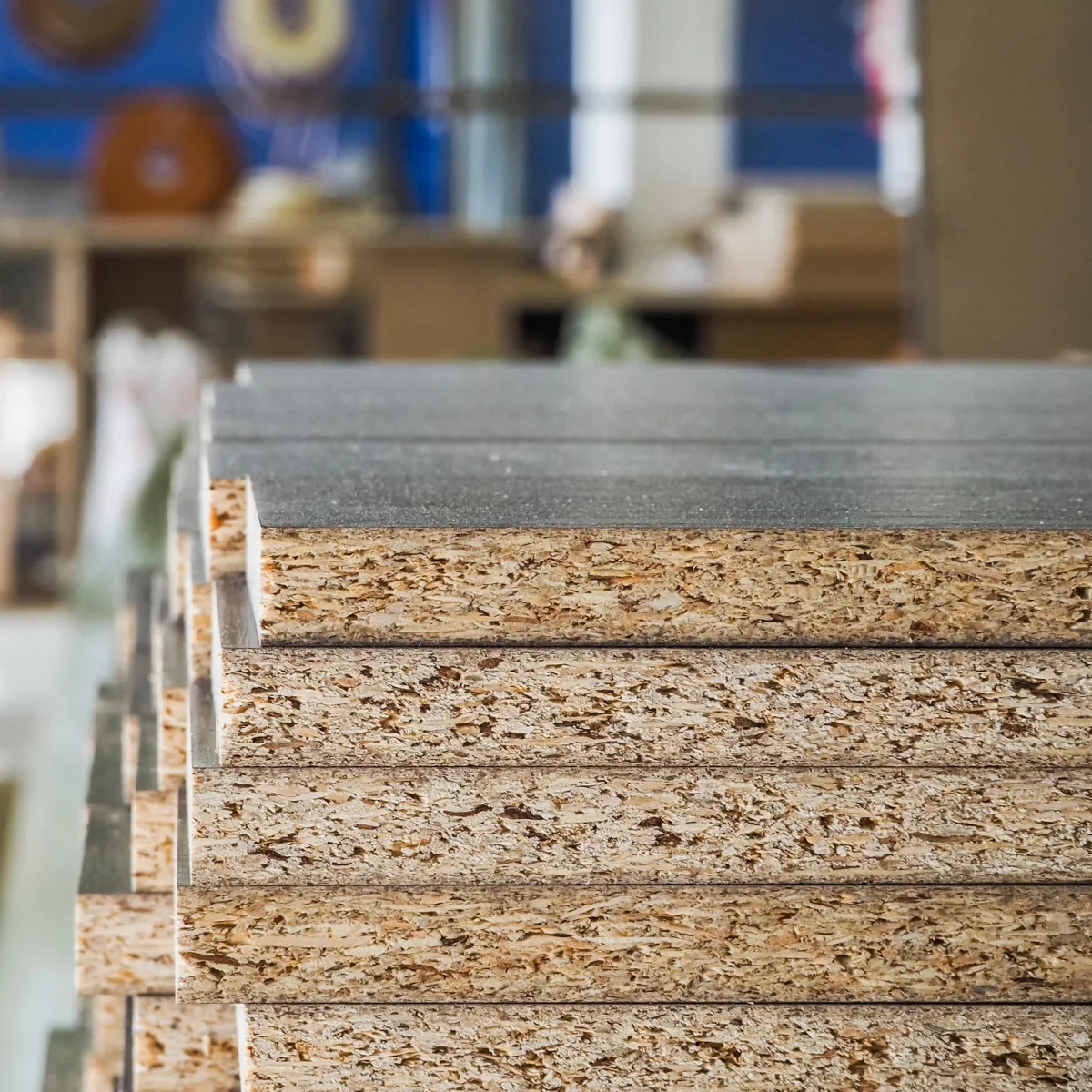
3. Particle Board (Budget Option)
What It Is
Made from wood chips and sawdust bonded together with adhesive.
Where It Works Best
- Low-use kitchens
- Rental homes
- Temporary setups
Advantages
- Affordable
- Lightweight
- Available in pre-laminated finishes
Limitations
- Weak moisture resistance
- Lower durability
- Poor screw holding
- Shorter lifespan
Best For
Budget kitchens where cost is the primary concern.
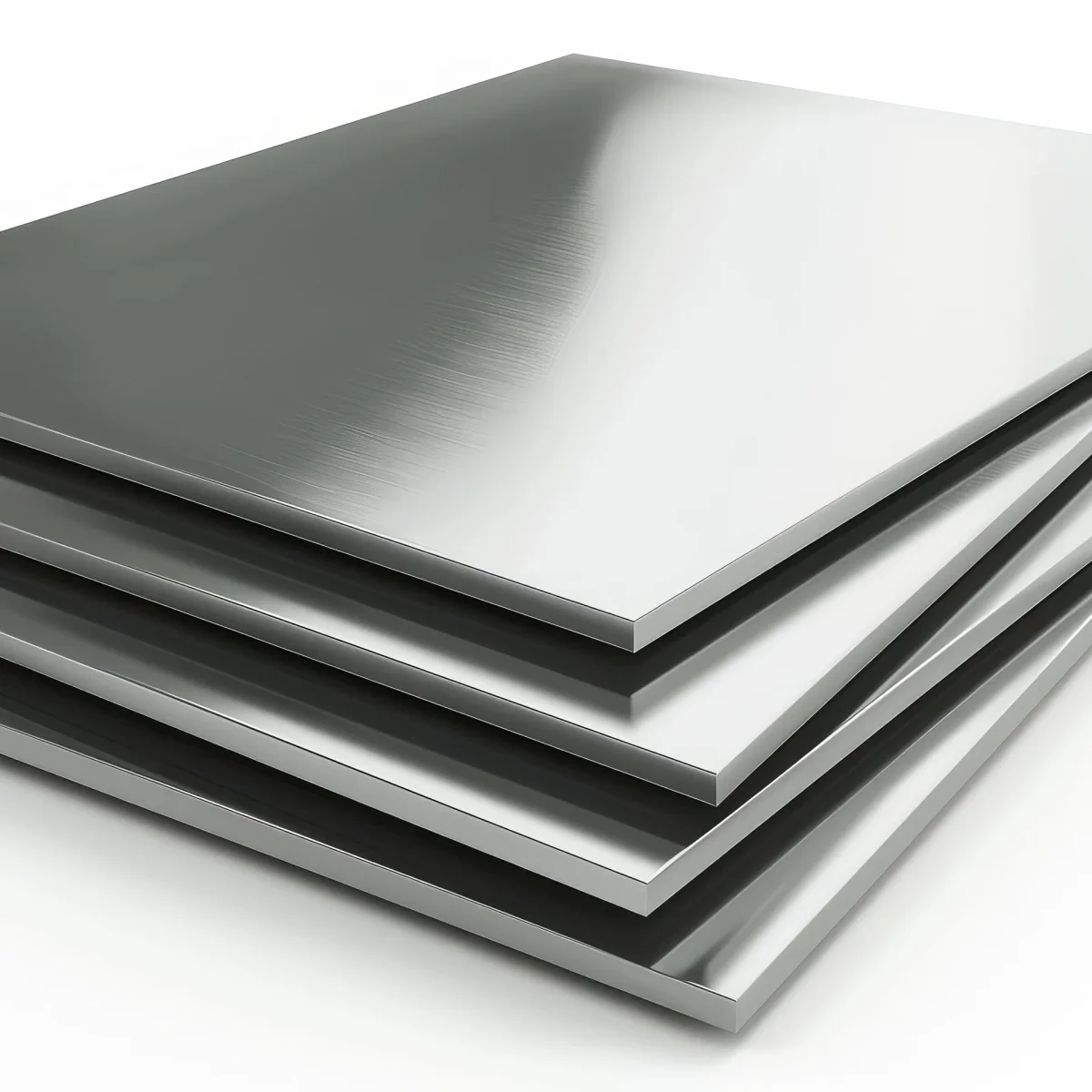
4. Stainless Steel (High-Performance Material)
What It Is
An alloy of iron and chromium that resists rust and corrosion. Common grades include 304 and 316.
Where It Works Best
- Entire kitchen structure
- Wet areas
- High-use kitchens
Advantages
- 100% waterproof
- Termite-proof
- Highly durable (decades of life)
- Hygienic and non-porous
- Heat and fire-resistant
Limitations
- Limited design flexibility compared to wood
- Higher initial investment
- Requires skilled manufacturing
Best For
Long-term, low-maintenance kitchens and high-humidity environments.

5. Solid Wood (Traditional Premium Option)
What It Is
Natural hardwood used directly for cabinets.
Where It Works Best
- Premium kitchens
- Classic or traditional designs
Advantages
- Rich, natural look
- Strong and durable
- Can be refinished
Limitations
- Expands and contracts with humidity
- Requires maintenance
- Expensive
- Not ideal for Indian kitchen conditions
Best For
Luxury designs where aesthetics are the top priority.

6. PVC / UPVC (Waterproof Alternative)
What It Is
Plastic-based material used for lightweight cabinets.
Where It Works Best
- Under-sink areas
- Budget waterproof solutions
Advantages
- Waterproof
- Termite-proof
- Lightweight
- Low maintenance
Limitations
- Limited finish options
- Lower strength
- Not suitable for heavy loads
Best For
Specific wet zones or budget kitchens that need water resistance.

7. Aluminium (Modern Alternative)
What It Is
Metal frames combined with panels (glass, boards, or laminates).
Where It Works Best
- Contemporary kitchens
- Frame-based cabinet systems
Advantages
- Rust-resistant
- Lightweight yet strong
- Sleek, modern look
Limitations
- Limited warmth in design
- Can be expensive
- Less common in Indian homes
Best For
Modern, minimal kitchens with a focus on durability and style.
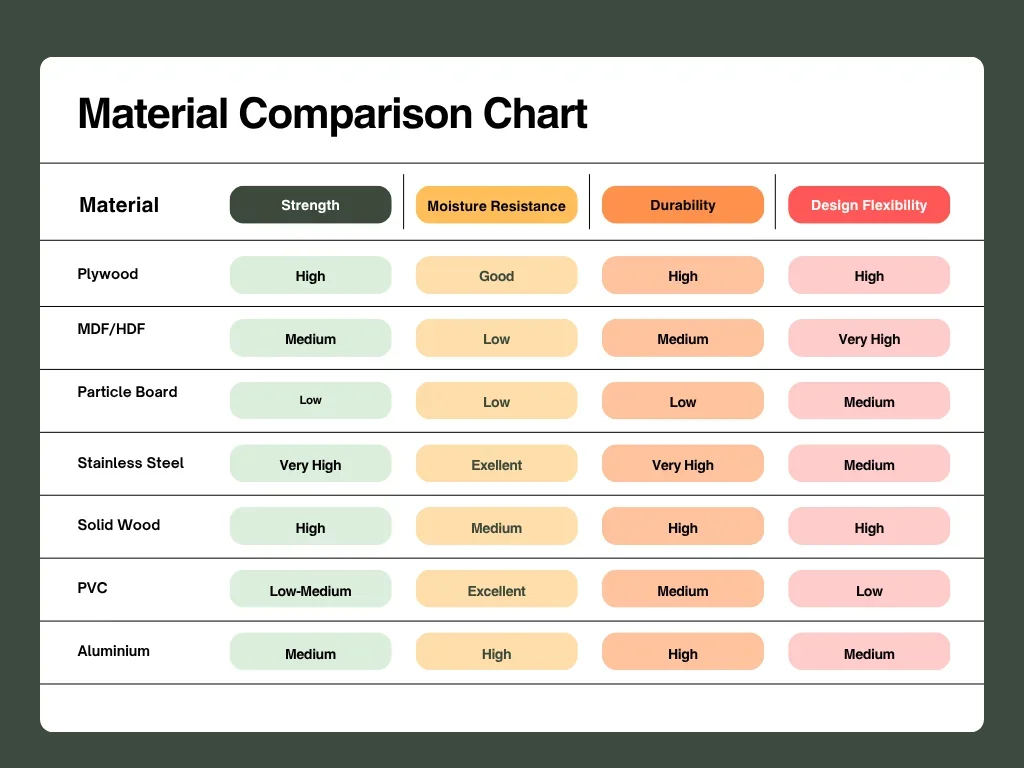
Comparison (Quick Understanding)
How to Choose the Right Material
When you’re wondering kitchen cabinets materials what is best, ask yourself:
- Do you want long-term durability? → Plywood (the right kind) or stainless steel
- Do you want design flexibility? → MDF or wood
- Do you want low cost? → Particle board
- Do you want zero moisture issues? → Stainless steel or PVC
Final Thoughts
Choosing the right one from the multiple options in kitchen modular materials is not about picking the most expensive option.
It’s about picking the right material for the right purpose.
Because a kitchen is used every day.
And the material you choose decides how well it performs, not just how it looks.