
Kitchen Durability: How Long Does Each Modular Kitchen Material Last?
Compare the lifespan, pros and cons of modular kitchen materials like stainless steel, BWP plywood, HDHMR, MDF and more to choose the right one.
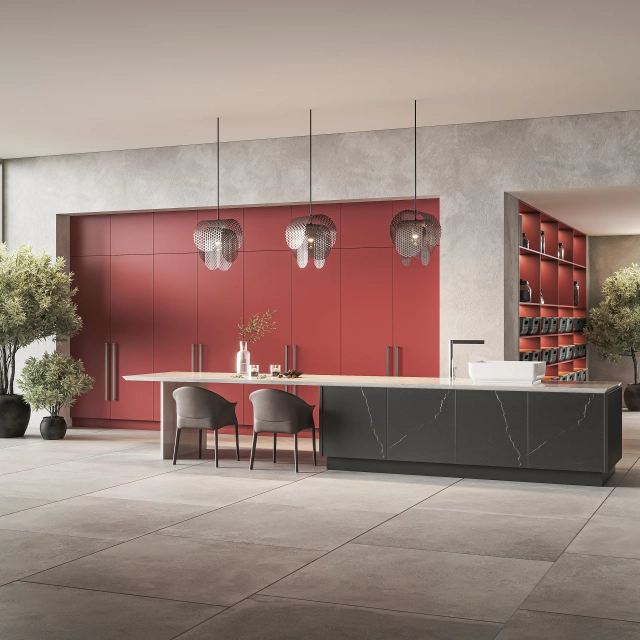
There are many factors that go into making a modular kitchen durable but the material you choose is what truly determines how long your kitchen will last. In this guide, we break down the lifespan, durability, and pros and cons of every major modular kitchen carcass material available today.
Why Carcass Material Matters More Than You Think?

The carcass (or cabinet box) is the structural skeleton of your modular kitchen. Although it’s hidden behind shutters and finishes, it does all the heavy lifting for your kitchen. Since it’s constantly exposed to moisture, heat, and daily impact, the quality of your kitchen’s carcass material directly affects the following:
- How well your kitchen resists water damage and swelling
- Whether it stays termite- and pest-free
- How much weight it can hold (utensils, appliances, groceries)
- How many years it’ll last before you need a replacement or major repair
Lifespan of a Modular Kitchen based on Carcass and Cabinet Material
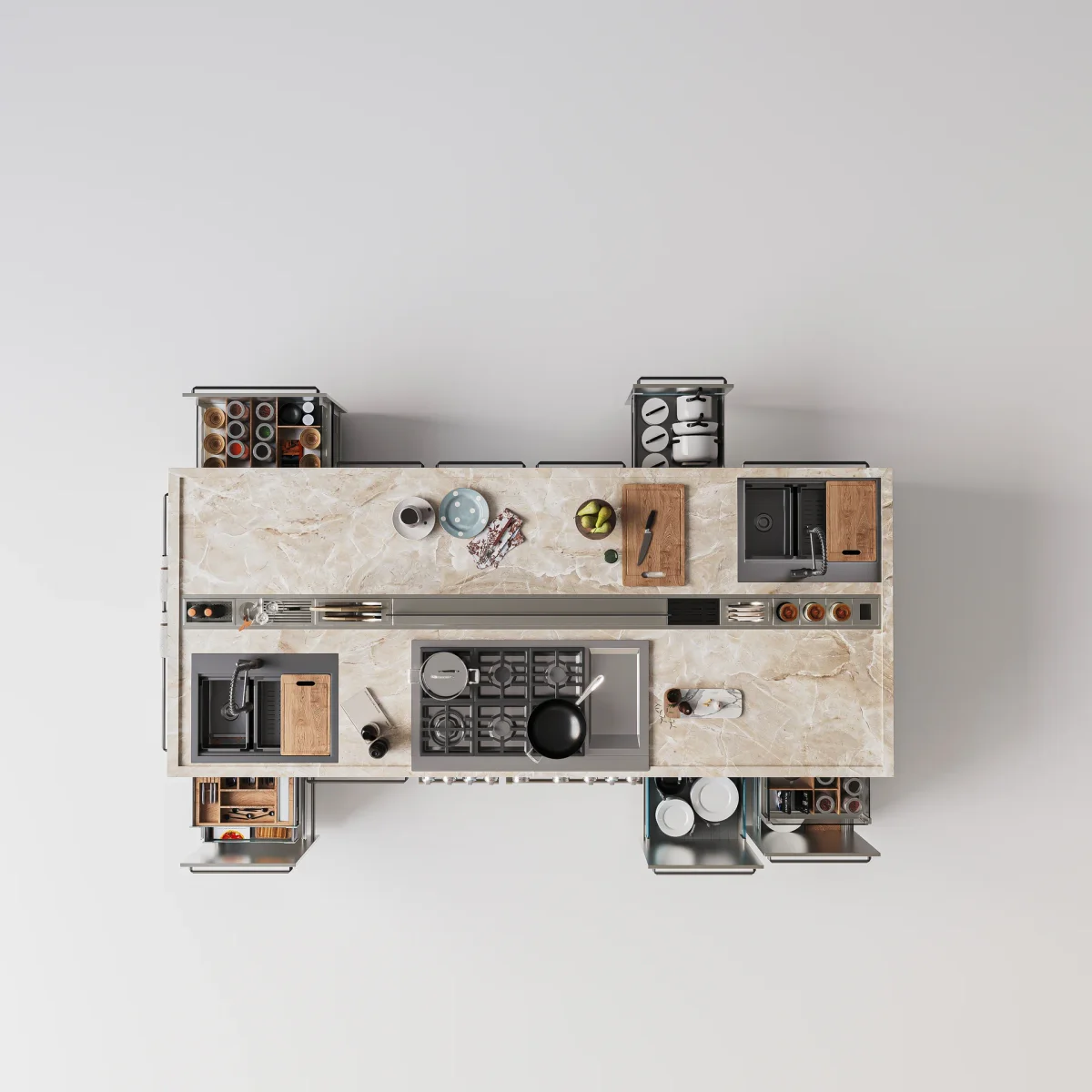
1. Stainless Steel
Average lifespan: 20–30+ years
Stainless steel modular kitchens are the most durable option on the market, and they’re widely used in commercial kitchens for this very reason.
- Pros: 100% waterproof, termite- and borer-proof, fire- and heat-resistant, hygienic and easy to sanitise, doesn’t warp or swell
- Cons: Higher upfront cost, can dent with heavy impact, can show fingerprints
- Best for: Humid climates, commercial-style kitchens, homeowners prioritising longevity over aesthetics
With Kuche7’s stainless steel kitchens, you don’t even have to worry about the aesthetics of your kitchen, as we offer over 20,000 options in colours, finishes and textures.
2. Solid Wood
Average lifespan: 15–25 years (with proper maintenance)
Traditional solid wood (teak, sheesham, etc.) offers a timeless, premium look but requires more upkeep than engineered materials.
- Pros: Strong and sturdy, ages well with a rich natural look, can be refinished/repolished multiple times
- Cons: Expensive, prone to swelling or cracking in high humidity without sealing, vulnerable to termites, needs periodic maintenance
- Best for: Dry climates, traditional or classic kitchen designs, buyers willing to invest in upkeep
3. BWP / Marine Plywood (Boiling Water Proof)
Average lifespan: 15–20 years
BWP means Boiling Water Proof. It is the highest waterproof grade of plywood and is tested by boiling it in water to ensure it can handle moisture, making it ideal for kitchens.
- Pros: Excellent water and moisture resistance, strong screw-holding capacity, resists warping and delamination, good termite resistance
- Cons: Higher cost than MDF or particle board, quality varies by brand, heavier than other engineered boards
- Best for: Kitchens in humid or coastal regions, sink and undercounter cabinets, long-term investment buyers
4. HDHMR (High-Density High-Moisture Resistance)
Average lifespan: 12–18 years
HDHMR is a type of engineered wood made by compressing wood fibres under high pressure. It is strong, handles moisture well, and is a good mid-range option for kitchens.
- Pros: Denser and stronger than MDF, good moisture resistance, smooth surface ideal for high-gloss and PU finishes, better screw-holding than MDF
- Cons: Still less waterproof than BWP plywood, moderate cost, less commonly available in all markets
- Best for: Modern kitchens wanting a sleek finish with better durability than MDF at a reasonable price
5. MDF (Medium-Density Fiberboard)
Average lifespan: 8–12 years
MDF is a popular material for cabinet doors and shutters. Its smooth, even surface makes it easy to apply finishes like laminate, acrylic, and PU.
- Pros: Smooth finish perfect for high-gloss shutters, budget-friendly, easy to shape into intricate designs
- Cons: Poor water resistance (swells if exposed to moisture for long), weaker screw-holding, not ideal for base cabinets near sinks
- Best for: Wall cabinets, shutters, and areas with minimal water exposure
6. Particle Board
Average lifespan: 5–8 years
Particle board is the most budget-friendly carcass material, made from compressed wood particles and resin.
- Pros: Most affordable option, lightweight, widely available
- Cons: Lowest moisture resistance (swells and crumbles when wet), weakest screw and weight-holding capacity, shortest lifespan among all options
- Best for: Budget kitchens, low-usage or secondary kitchens, dry cabinet areas away from water
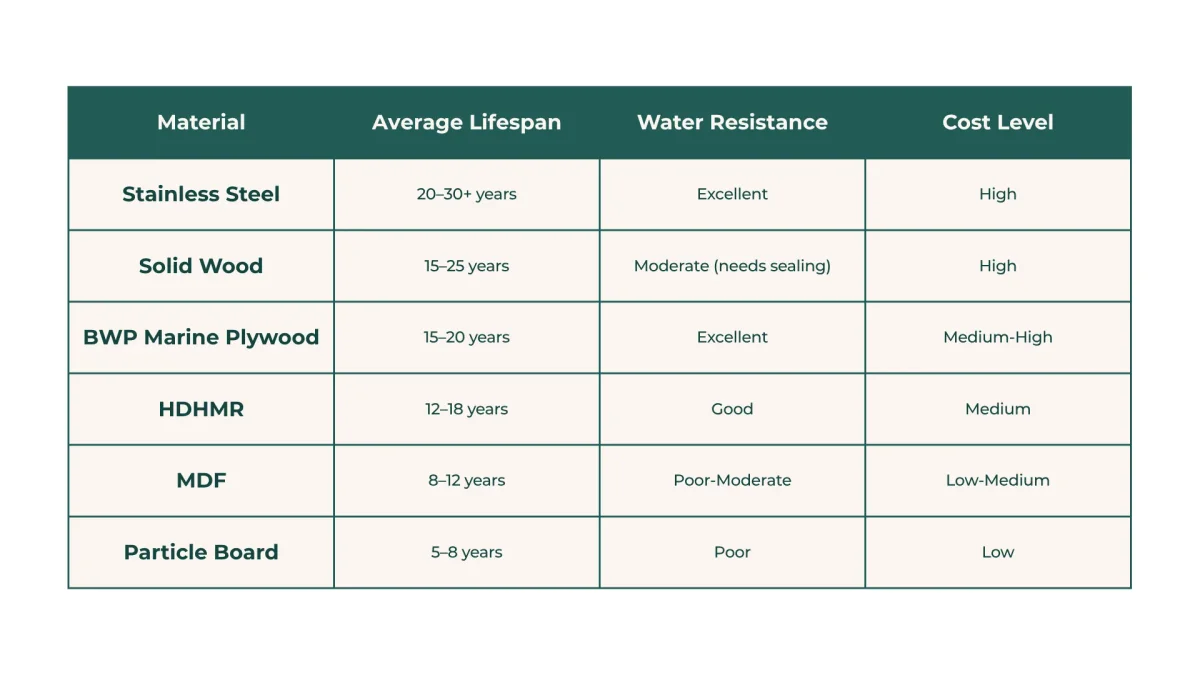
Quick Comparison Table
Tips to Maximize Your Modular Kitchen's Lifespan
- Use waterproof material near the sink and hob, where the kitchen is exposed to the most water and heat, even if you choose a more affordable material for the rest of the kitchen.
- Make sure all exposed edges are properly sealed to stop moisture from getting inside the boards.
- Wipe up water spills as soon as possible to prevent damage to cabinet surfaces.
- Get regular termite treatment if your kitchen uses wood-based materials like plywood or MDF.
- Choose good-quality hinges and drawer channels, as poor fittings can reduce the life of your kitchen, no matter how good the cabinet material is.
- Keep your kitchen well ventilated to reduce moisture and humidity.
Conclusion
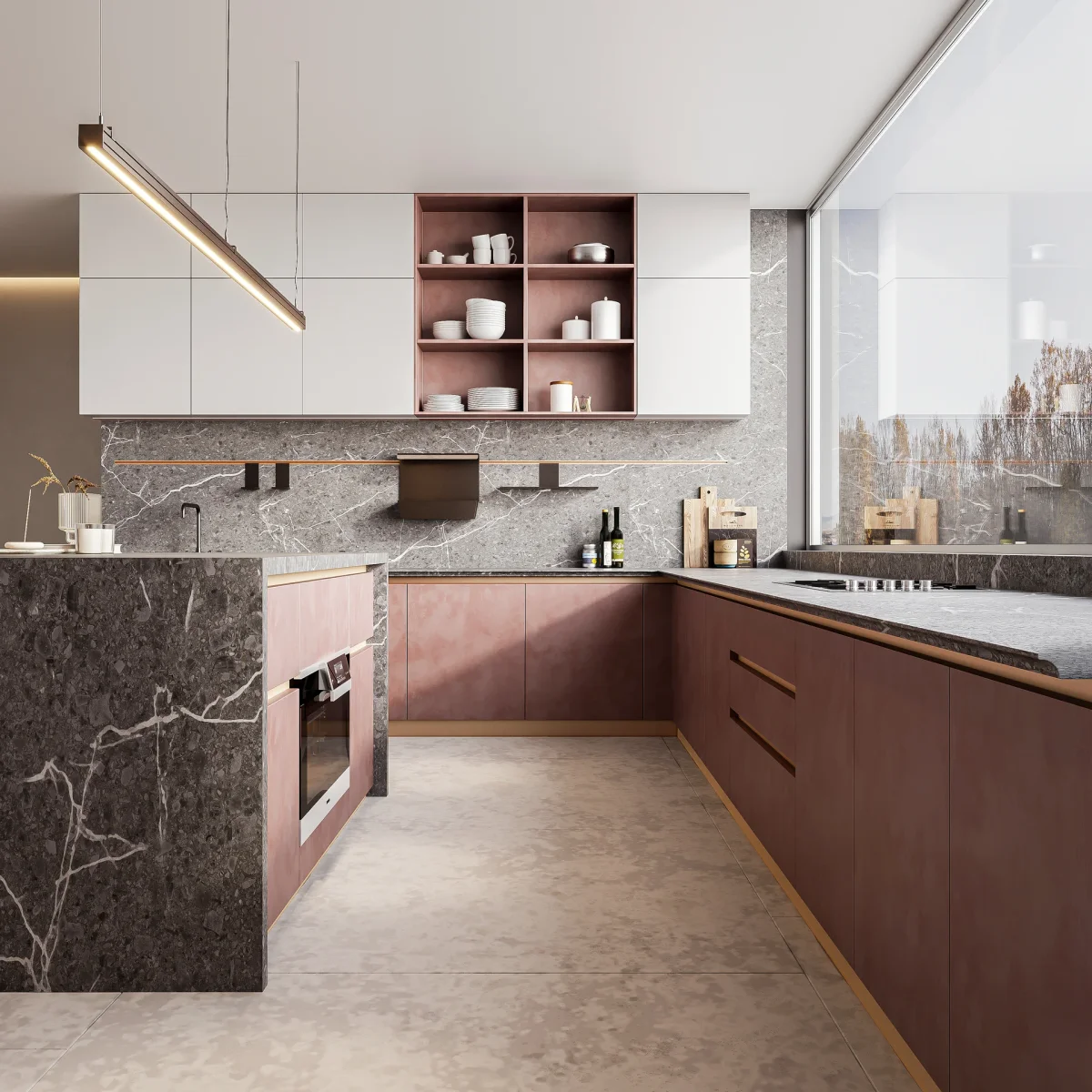
Choosing the right carcass material is one of the most important decisions when getting a modular kitchen, it directly determines how many years you’ll enjoy it before needing repairs or replacement. While stainless steel and BWP marine plywood offer the best long-term durability, materials like MDF and particle board can still work well in low-moisture zones if you’re working with a tighter budget. Make sure to match the material to your climate, usage, and budget to get the best value and lifespan out of your investment.
Frequently Asked Questions (FAQs)
1. Which material is best for a modular kitchen in terms of durability?
Stainless steel and BWP (Boiling Water Proof) marine plywood are considered the most durable, offering the best resistance to water, humidity, and termites.
2. How long does a plywood modular kitchen last?
A modular kitchen made with good-quality BWP marine plywood typically lasts 15–20 years with proper maintenance and minimal water exposure.
3. What does BWP mean in plywood?
BWP stands for Boiling Water Proof. It means the plywood has been tested by boiling to ensure it can withstand prolonged exposure to moisture without delaminating.
4. Is MDF or particle board better for modular kitchens?
MDF is generally better than particle board as it has a smoother finish and slightly better durability, though both have poor water resistance compared to plywood or HDHMR.
5. How long does a particle board kitchen last?
Particle board kitchens typically last around 5–8 years, especially if exposed to moisture, making it the least durable carcass option available.
6. Is stainless steel better than plywood for kitchen cabinets?
Stainless steel generally lasts longer and offers much better water and termite resistance compared to plywood.
7. What is HDHMR board and is it good for kitchens?
HDHMR (High-Density High-Moisture Resistance) is an engineered board that offers better moisture resistance and strength than MDF, making it a good mid-range option for modern modular kitchens.
8. How can I make my modular kitchen last longer?
Using waterproof materials near the sink and hob, applying proper edge-banding, choosing quality hardware, and wiping spills promptly can significantly extend your kitchen's lifespan.
9. Which carcass material is best for humid climates?
Stainless steel and BWP marine plywood are best suited for humid or coastal climates due to their superior resistance to moisture-related swelling and damage.