
Modular Kitchen Hardware: Types, Components & Functions Explained
Learn about the different types of modular kitchen hardware, their functions, and how they improve your kitchen’s performance and durability.
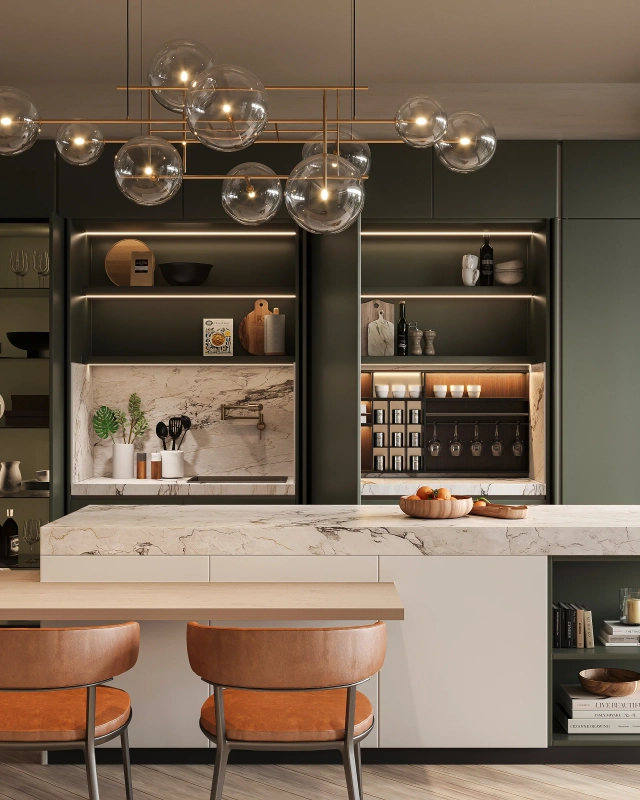
Whether you’re planning a new modular kitchen or renovating an existing one, understanding kitchen hardware is just as important as choosing the right cabinets or countertops. While finishes and colours define how your kitchen will look, the hardware you choose will determine how it performs everyday.
From soft-close hinges and drawer systems to pull-out pantry units and corner storage solutions , every piece of hardware contributes to the functionality, durability, and convenience of your kitchen.
This guide explains everything you need to know about modular kitchen hardware, the different types available, how to choose the right options, and the common mistakes homeowners should avoid.
Quick Summary
If you’re short on time, here are the key takeaways:
- Kitchen hardware refers to the functional components that allow cabinets, drawers, and storage systems to operate smoothly.
- High-quality hardware improves durability, ease of use, and the overall lifespan of a modular kitchen.
- The most important hardware includes hinges, drawer systems, lift mechanisms, pull-outs, corner solutions, handles, and storage accessories.
- Investing in high-quality hardware usually delivers better long-term value than spending more on decorative finishes alone.
- Always choose hardware based on quality, performance, warranty, and compatibility with your kitchen design.
What Is Modular Kitchen Hardware?
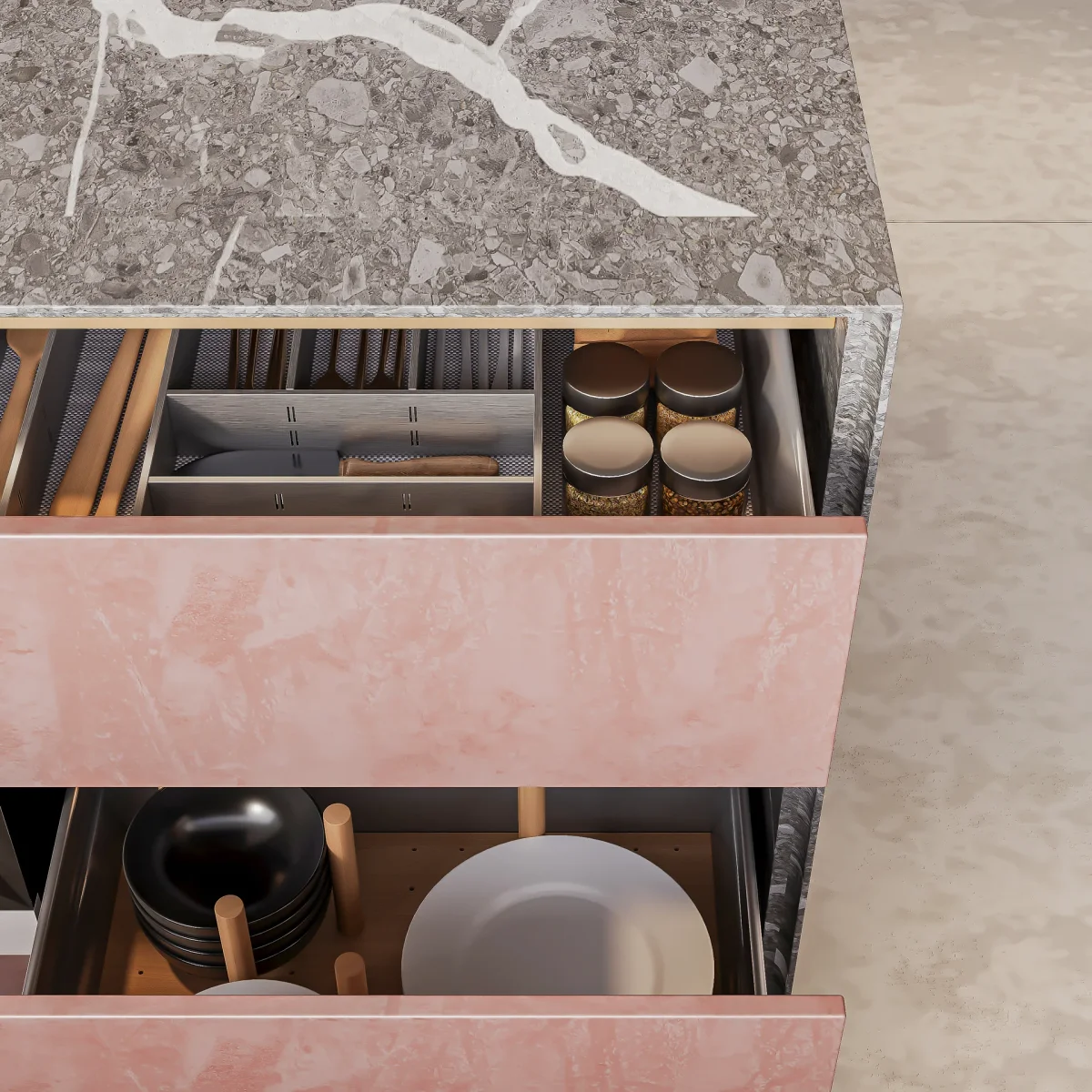
Modular kitchen hardware includes all the mechanical and functional components that make a kitchen work efficiently. These components are installed inside or on cabinets and drawers to improve accessibility, storage, and everyday use.
For example, when a drawer glides open effortlessly, a cabinet door closes softly without slamming or making any noise, or a tall pantry unit slides out to reveal neatly organised shelves, it’s all thanks to your kitchen hardware working quietly behind the scenes.
Modular kitchen hardware typically includes:
- Cabinet hinges
- Drawer systems
- Drawer runners and channels
- Lift-up mechanisms
- Pull-out storage systems
- Corner storage solutions
- Handles and handleless profiles
- Waste bin systems
- Cutlery organisers
- Internal storage accessories
Although these components are often hidden from view, they form the backbone of your kitchen’s functionality.
Why Is Kitchen Hardware So Important?
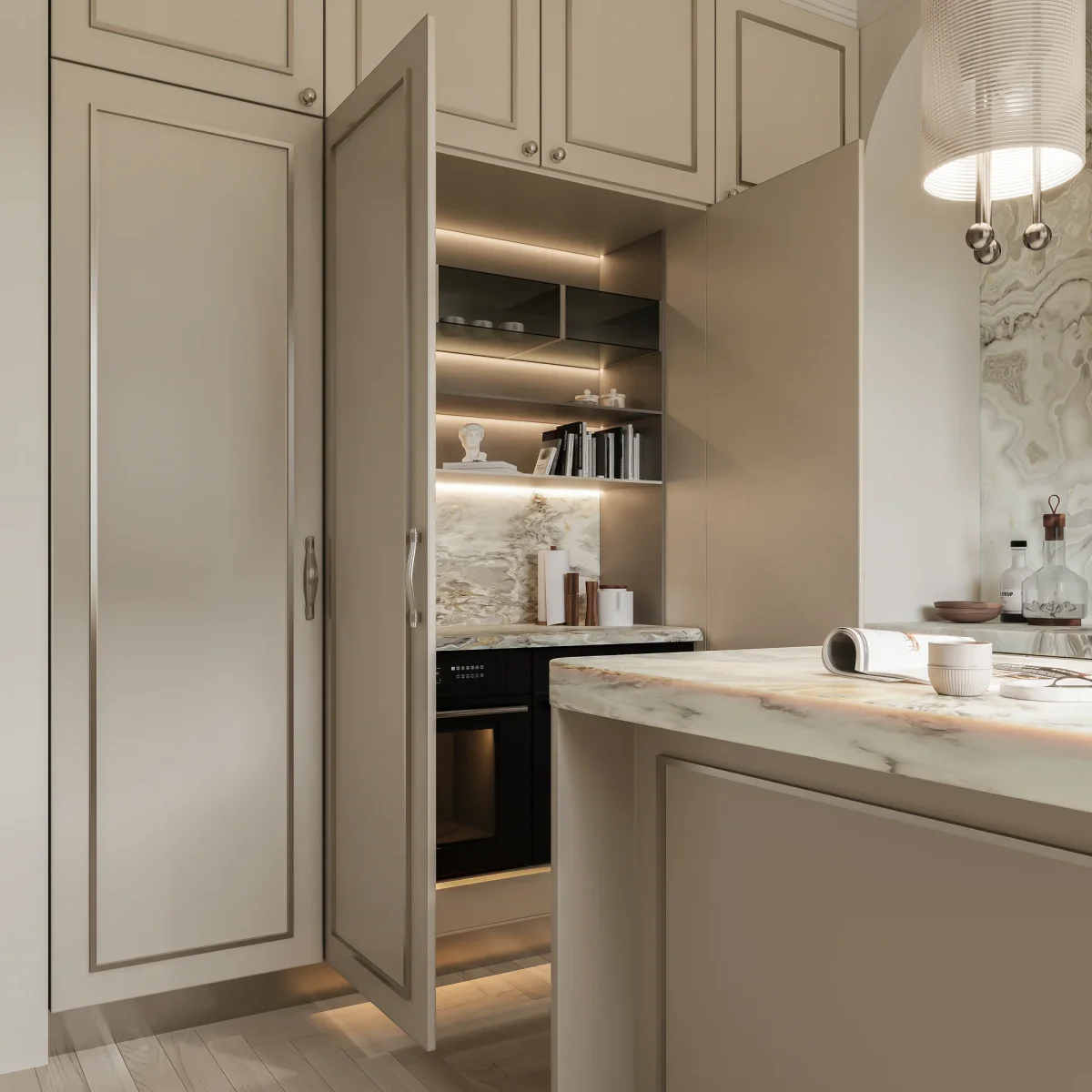
Hardware influences almost every interaction you have with your kitchen.
Every time you open a drawer, lift an overhead cabinet, access a pantry, or organise utensils, you are relying on the quality of the hardware.
Poor-quality hardware can lead to:
- Noisy cabinet doors
- Misaligned drawers
- Reduced storage efficiency
- Frequent repairs
- Premature wear and tear
High-quality hardware, on the other hand, provides:
- Smooth Operation: Cabinets and drawers open effortlessly every day.
- Longer lifespan: Quality hardware is designed to withstand thousands of opening and closing cycles.
- Better organisation: Pull-outs and organisers maximise usable storage.
- Improved safety: Soft-close systems reduce slamming and minimise accidental injuries.
- Greater convenience: Everyday cooking becomes faster and more comfortable.
Kitchen Hardware vs Kitchen Accessories: What's the Difference?
These two terms are often used interchangeably, but they refer to different things.
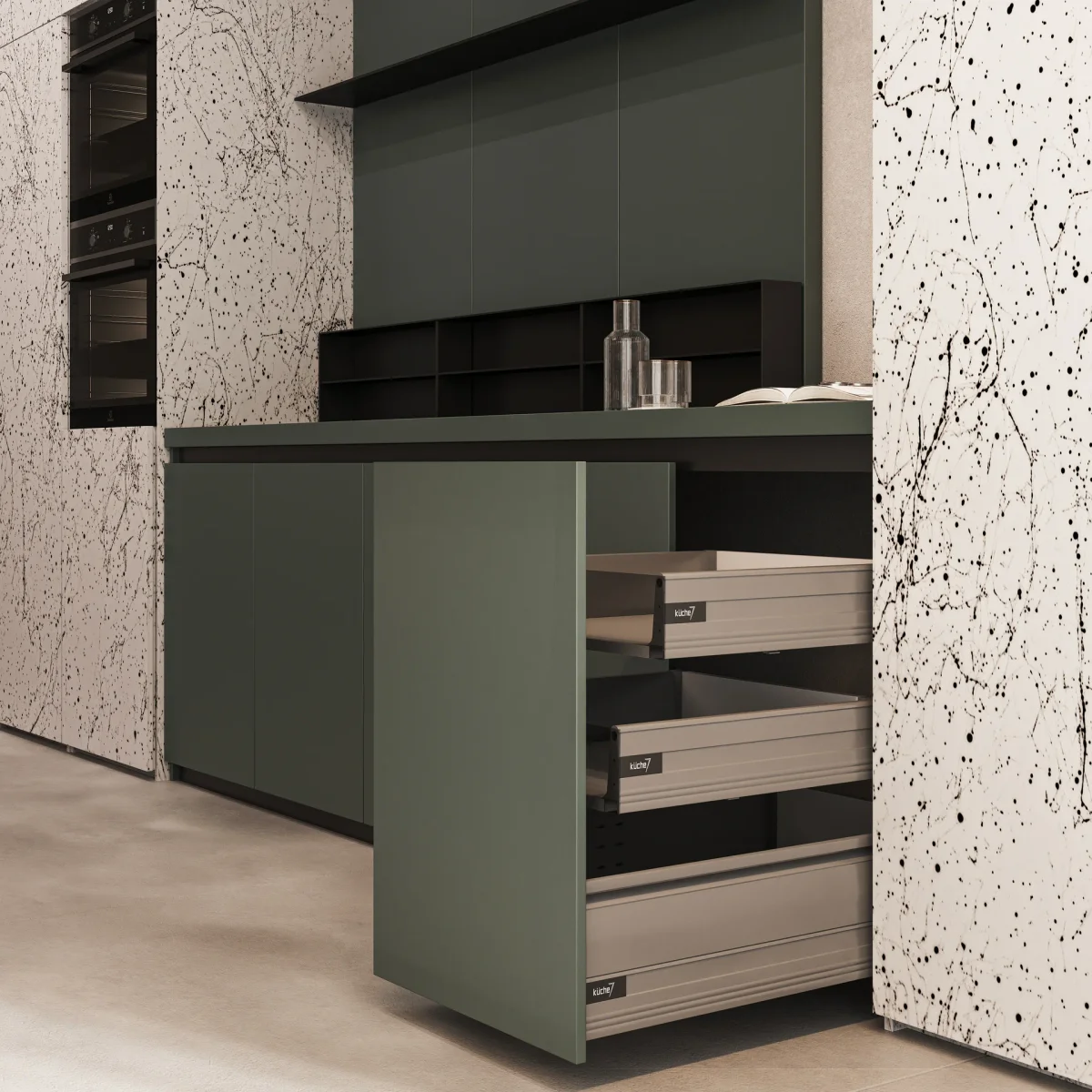
Kitchen Hardware
Mechanical components that allow cabinets and drawers to function like:
- Hinges
- Drawer systems
- Lift mechanisms
- Handles
- Drawer channels
Kitchen Accessories
Organisational products that improve storage like:
In simple terms, hardware makes your kitchen function, and accessories help you stay organised. Both are important, but investing in reliable hardware first creates a stronger foundation for a long-lasting kitchen.
What Are the Different Types of Modular Kitchen Hardware?
Modern kitchens use a wide range of hardware systems, each designed for a specific purpose.
The most common categories include:
1. Cabinet Hinges
Cabinet hinges connect the cabinet door to the cabinet body and determine how smoothly it opens and closes.
Modern kitchens commonly use concealed soft-close hinges that remain hidden when the cabinet is shut.
Good-quality hinges offer:
- Quiet closing
- Better door alignment
- Reduced wear on cabinets
- Long service life
2. Drawer Systems
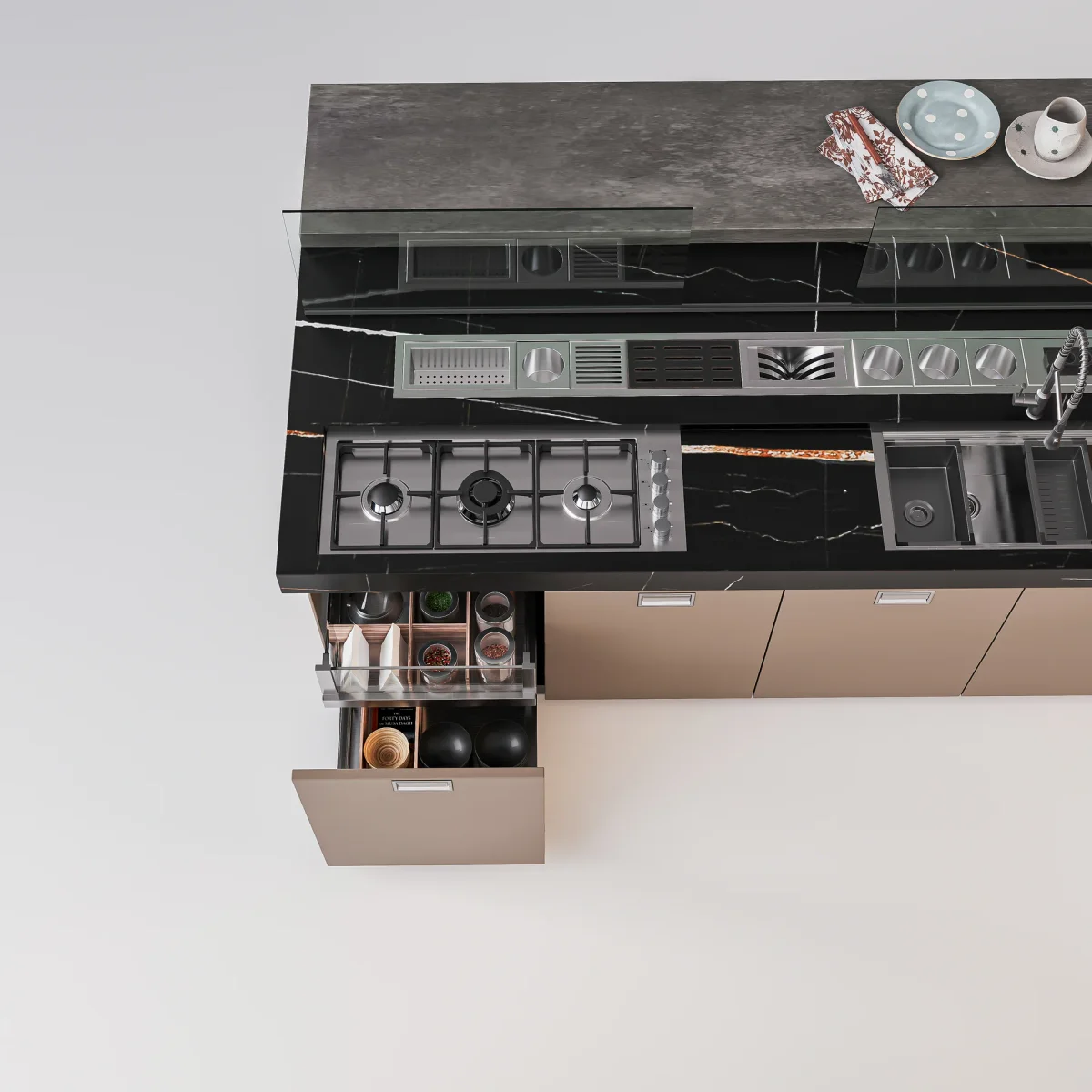
Drawers are no longer simple wooden boxes sliding on basic runners. Modern drawer systems are designed for smooth movement, better weight distribution, and improved organisation.
Common drawer types include:
- Tandem drawers
- Slim drawer systems
- Internal drawers
- Deep storage drawers
- Heavy-duty utility drawers
3. Drawer Channels and Runners
Drawer channels are the mechanisms that allow drawers to slide in and out. The right channel depends on the weight of the drawer and how frequently it will be used.
The three most common options are:
1. Roller Channels
Best suited for light-duty uses like stationery trays, cutlery drawers, and basic bedroom furniture.
2. Telescopic or Ball Bearing Channels
Provides smoother movement and has a higher load bearing capacity.
3. Undermount Channels
Installed beneath the drawer, these channels offer a cleaner appearance and quieter operation.
4. Lift-Up Mechanisms
Wall cabinets have evolved far beyond traditional side-opening doors. Lift mechanisms allow cabinet fronts to open upwards, making overhead storage easier to access while reducing obstruction during cooking.
The four most popular lift systems include:
1. Parallel lifts
The cabinet door lifts straight upward and stays parallel to the cabinet, making it ideal for wide overhead units.
2. Bi-fold lifts
The door folds into two sections as it opens, making it suitable for taller wall cabinets with limited clearance.
3. Swing lifts
The entire cabinet door swings upward in one smooth motion, providing quick and unobstructed access.
4. Stay lifts
The door opens upwards and remains securely in position until you gently pull it down to close.
5. Pull-Out Storage Systems
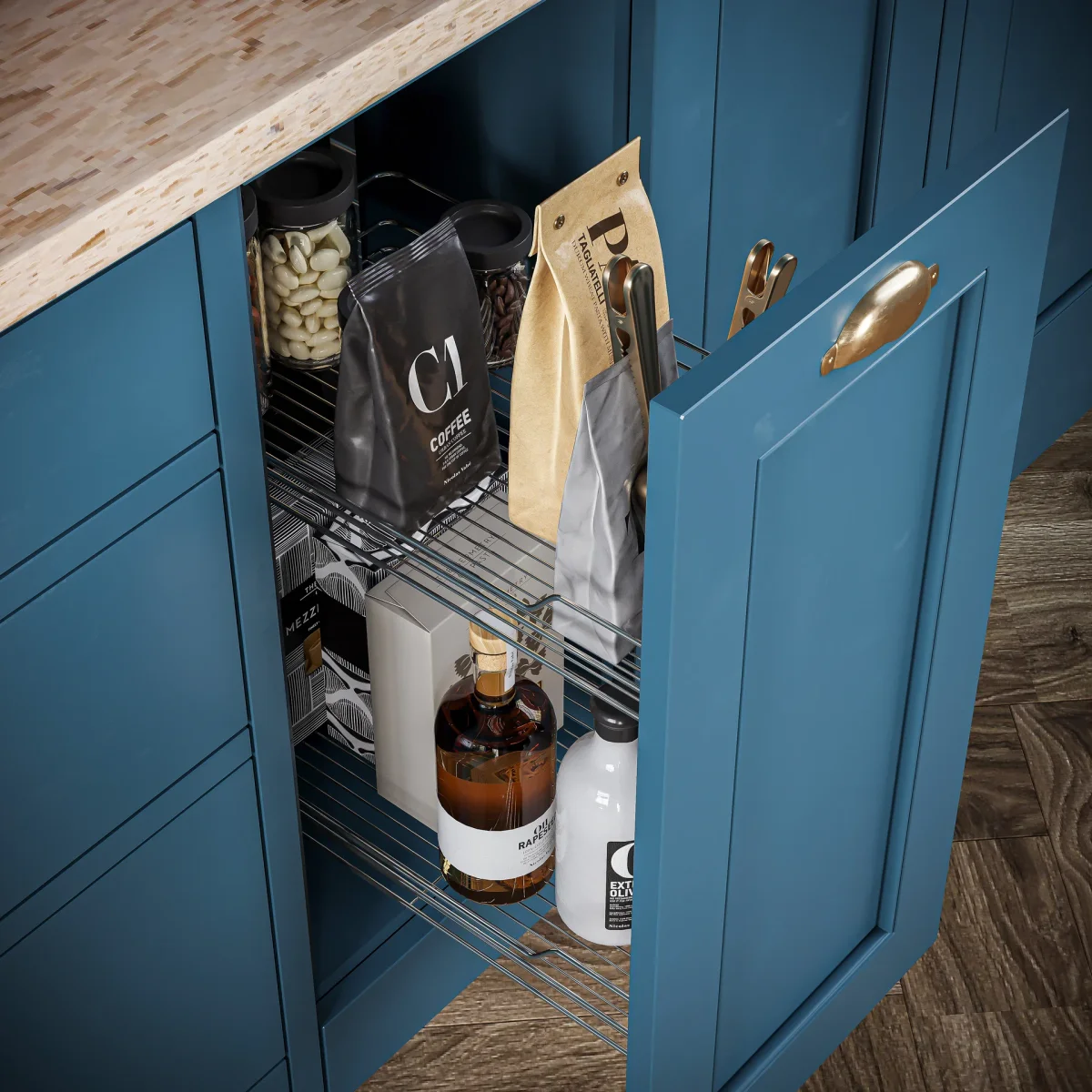
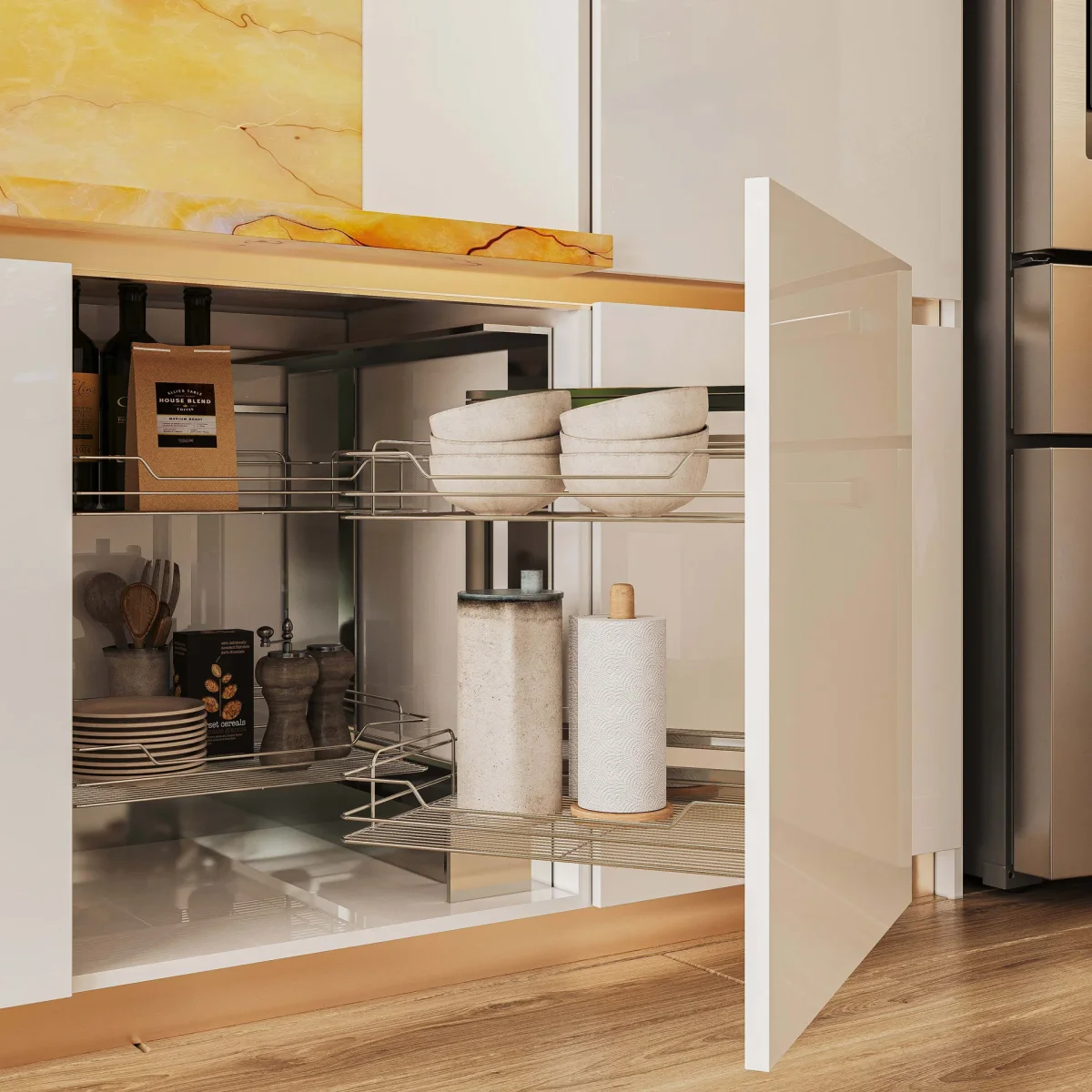
Pull-out systems make it easier to access items stored inside deep cabinets. Instead of reaching into the back of a cabinet, the entire storage unit slides forward.
Common examples include:
- Bottle pull-outs
- Pantry pull-outs
- Tall unit pull-outs
- Under-sink organisers
- Cleaning storage pull-outs
6. Corner Storage Solutions
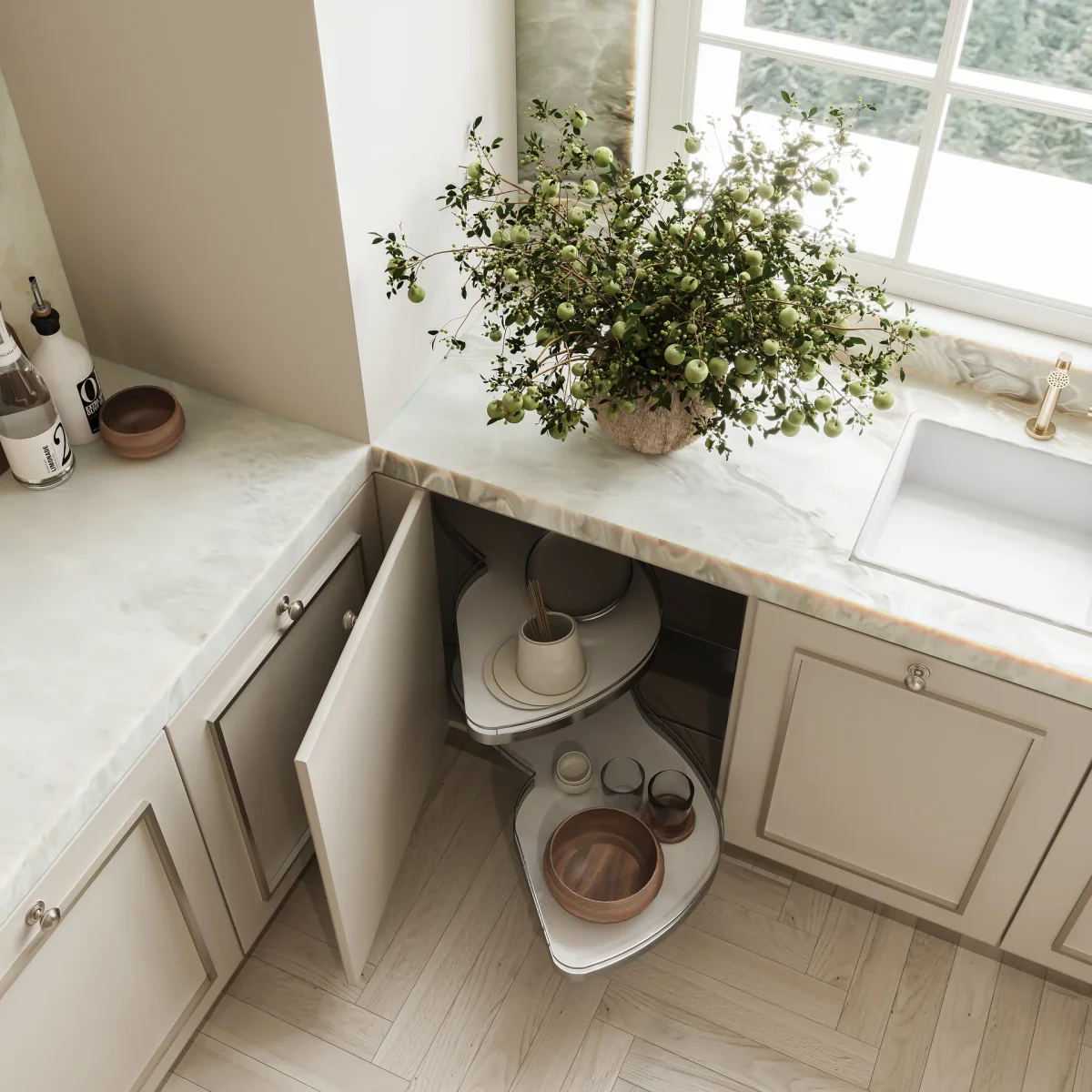
Corner cabinets are often the most difficult areas to access. Modern hardware transforms these spaces into practical storage through specialised mechanisms.
Examples include:
1. Magic corners
Pull-out shelves that bring items from the back of a corner cabinet into easy reach.
2. Carousel systems
Rotating circular shelves that make it easy to access items stored deep inside corner cabinets.
3. LeMans corner units
Kidney-shaped pull-out shelves that glide out individually, offering maximum access to corner storage.
4. Swing-out shelves
Shelves that swing completely out of the cabinet, allowing you to reach every stored item with ease.
7. Handles and Handleless Systems
Cabinet hardware also includes the way cabinets are opened. Each option influences both aesthetics and everyday usability.
Today’s kitchens generally feature one of three approaches:
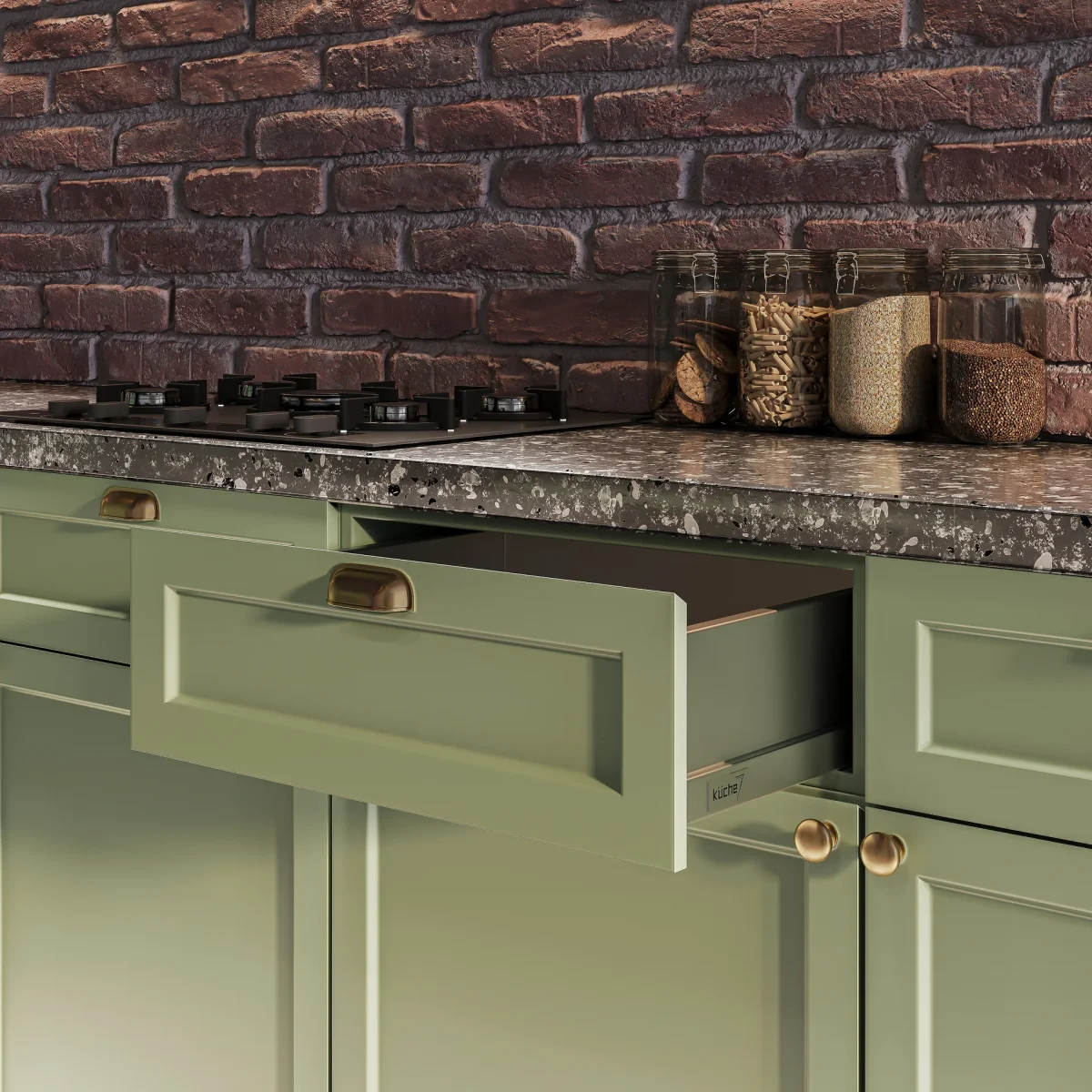
1. Traditional Handles
Visible handles mounted on the cabinet door or drawer front. They are available in a wide variety of styles to suit different kitchen designs, including:
- Bar Handles
- T-Bar Handles
- Knobs
- Cup Handles
- Recessed Handles
2. Integrated Profile Handles
Profile handles are built into the cabinet itself, creating a neat, minimalist appearance without externally mounted handles.
3. Push-to-Open Systems
A handleless solution where cabinets and drawers open with a gentle push.
Final Thoughts
Kitchen hardware may be hidden from view, but it plays a vital role in how your kitchen functions every day. Investing in quality hardware ensures smoother operation, better organisation, and a kitchen that continues to perform beautifully for years.