
Outdoor Kitchen Design: How to Plan the Layout, Materials and Storage
Learn how to plan an outdoor kitchen, from choosing the right layout and appliances to selecting durable cabinets, worktops and storage.
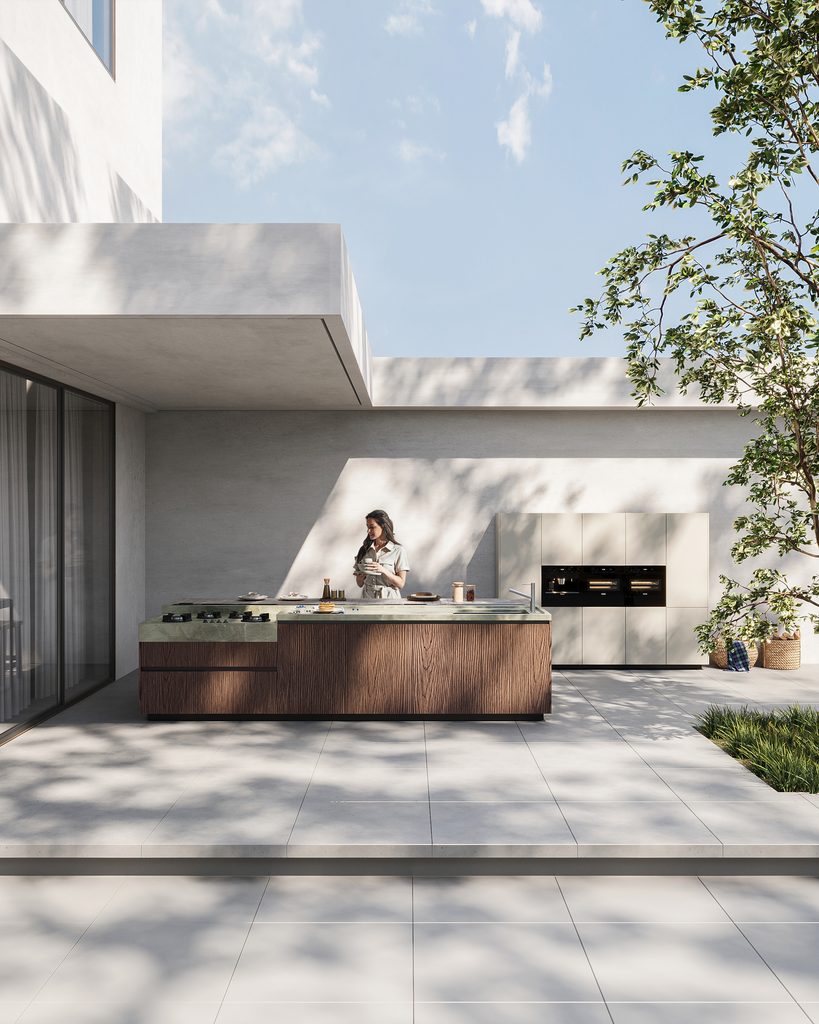
An outdoor kitchen gives you a dedicated place to cook, prepare meals and entertain guests in your garden, patio or terrace. It can be as simple as a cooking station with a worktop or a fully equipped setup with an island, appliances and storage.
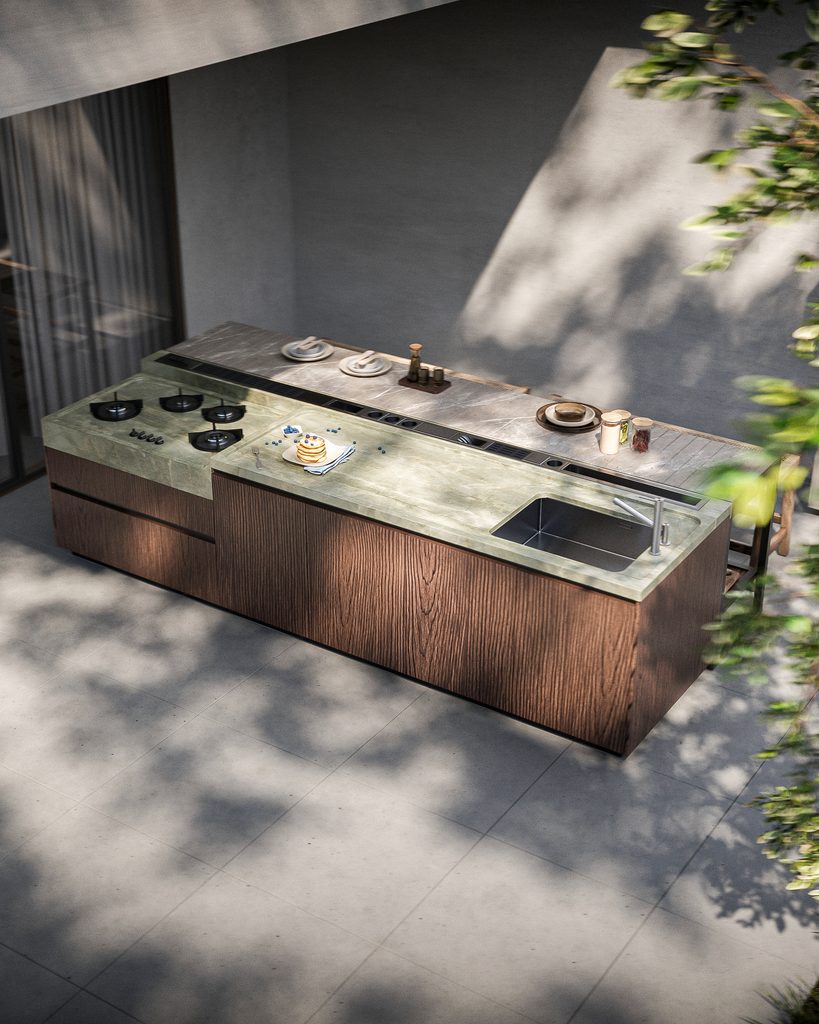
How to Plan an Outdoor Kitchen?
Planning an outdoor kitchen starts with choosing the right spot, layout, appliances and materials. Since it will be exposed to the weather, you’ll need to choose materials that can handle sunlight, rain and humidity.
Whether you want a simple cooking area or a fully equipped kitchen with an island, here are seven things to keep in mind.
Choosing the Right Location
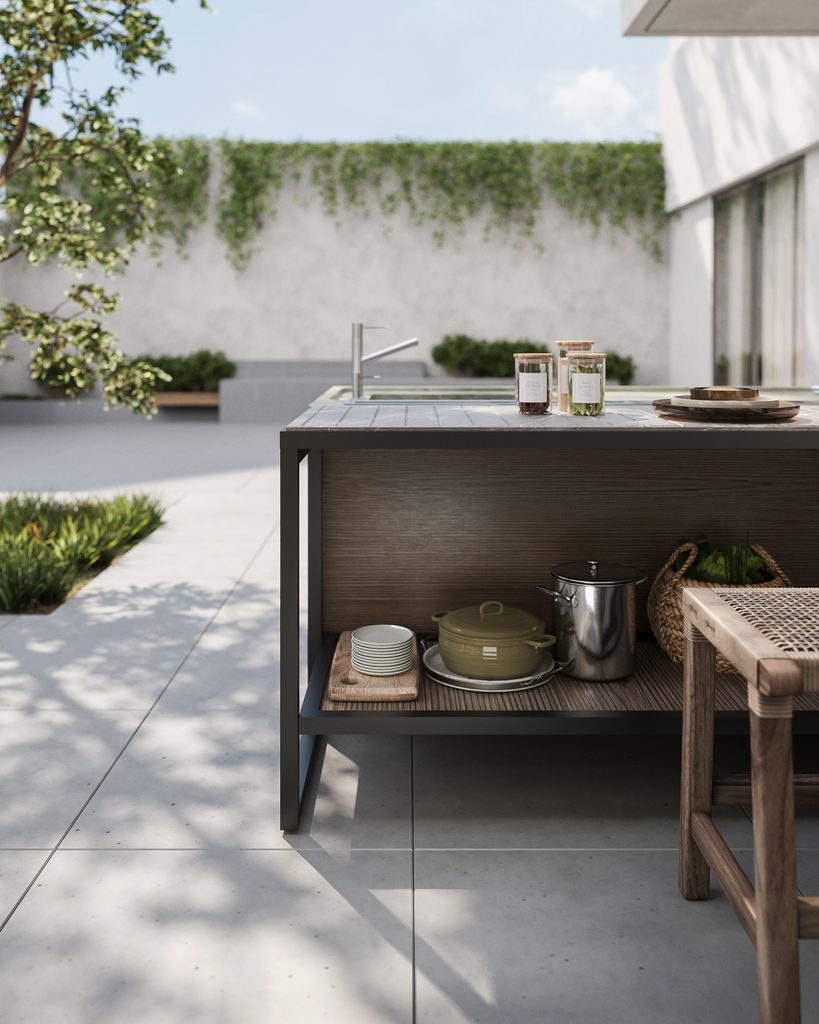
Choose a location that offers convenient access to your indoor kitchen. This makes it easier to carry ingredients, cookware and any other supplies you might need. It can also simplify connections for water, electricity and gas.
If you plan to entertain guests, consider the distance between the kitchen and your outdoor dining area. Check the direction of prevailing winds so that cooking smoke doesn’t blow towards guests or back into the house.
Also, assess sunlight, shade and rain exposure. A covered patio or pergola can protect the kitchen from direct sunlight and unexpected rains.
Outdoor Kitchen Layouts
The layout should suit the available space and your cooking requirements. Start by identifying where you need space for cooking, food preparation, washing and serving.
Common outdoor kitchen layouts include:
- Linear layout: All cabinets, appliances and work areas are arranged along a single wall or counter in one straight line. This outdoor kitchen layout works well in narrow or compact spaces.
- L-shaped layout: Cabinets and counters run along two adjoining sides, forming an L shape. This creates separate cooking and preparation zones while leaving the centre open.
- U-shaped layout: Counters and cabinets run along three connected sides, forming a U shape. This layout provides more worktop and storage space for larger outdoor kitchens.
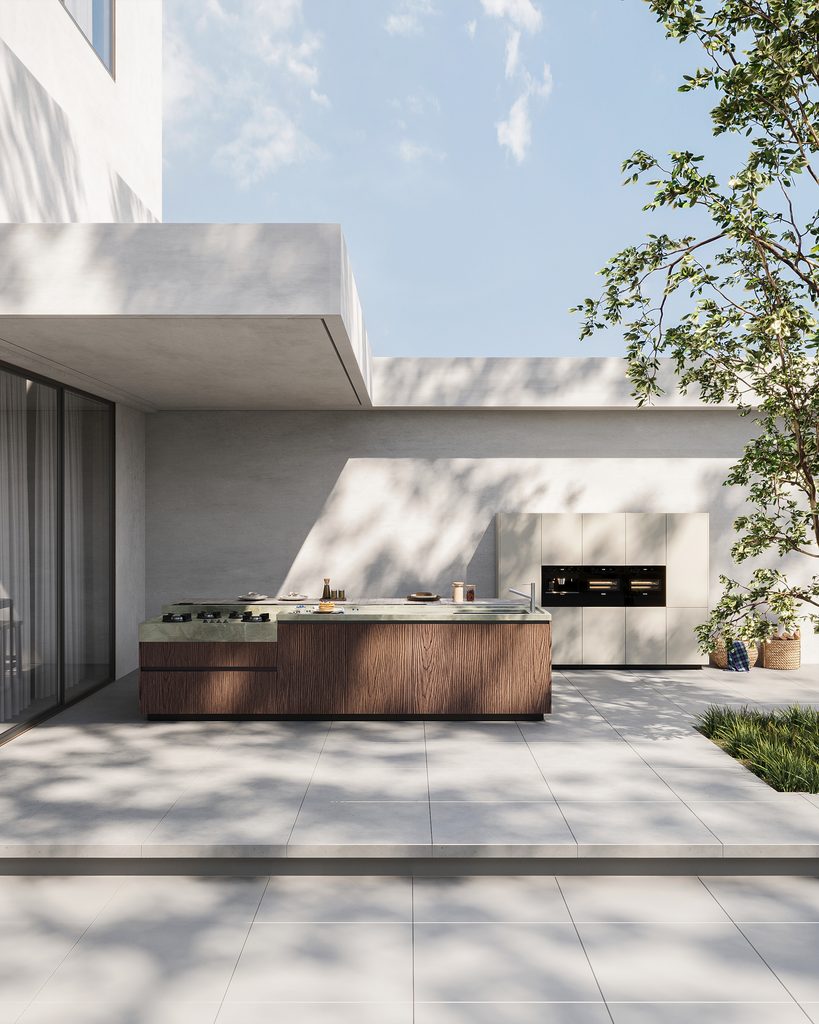
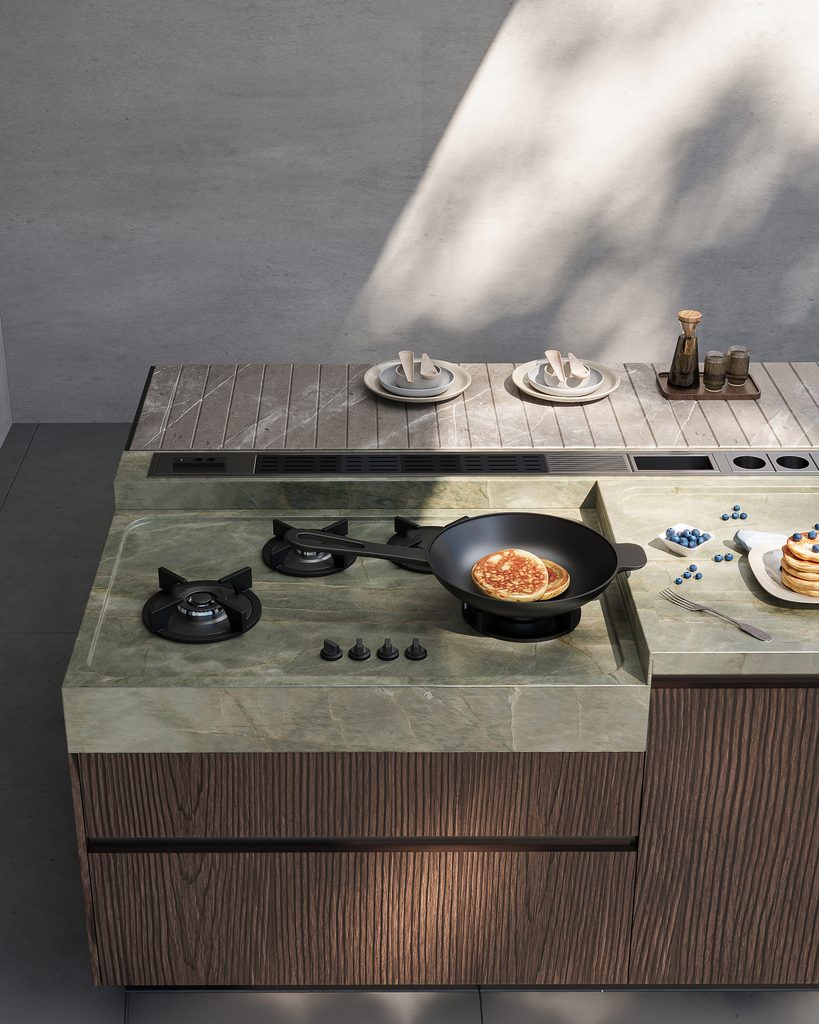
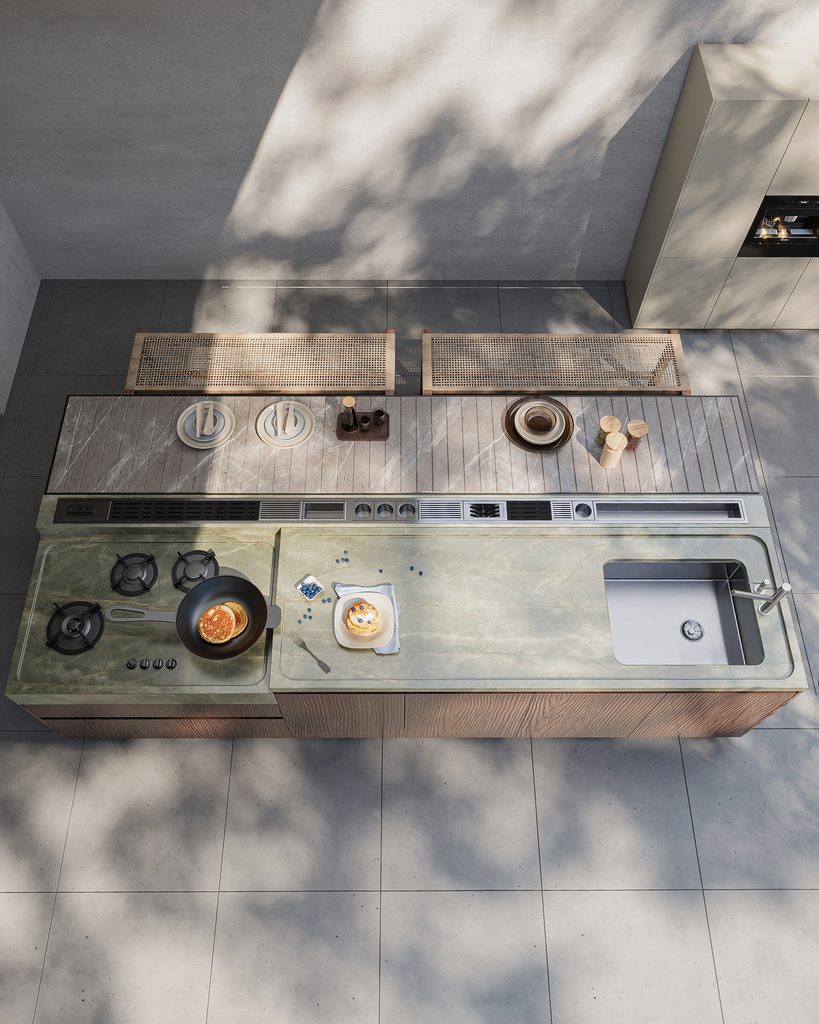
- Island layout: A freestanding counter or island sits separately from the main cabinetry, often opposite the main counter. It can accommodate cooking, food preparation, serving or seating.
An outdoor kitchen island is useful when you want to combine cooking and entertaining. It provides a central work surface while giving guests a place to gather.
Outdoor Kitchen Appliances
Your choice of appliances will influence the kitchen layout, counter dimensions and utility connections. Consider how you intend to use your outdoor kitchen before deciding what to include.
Popular appliances for outdoor kitchens include:
- Hob or grill: For cooking and grilling outdoors.
- Refrigerator: To keep ingredients and beverages cool.
- Oven or pizza oven: For baking, roasting and preparing different dishes.
- Beverage cooler: For storing chilled drinks.
- Sink: For washing ingredients and cleaning utensils.
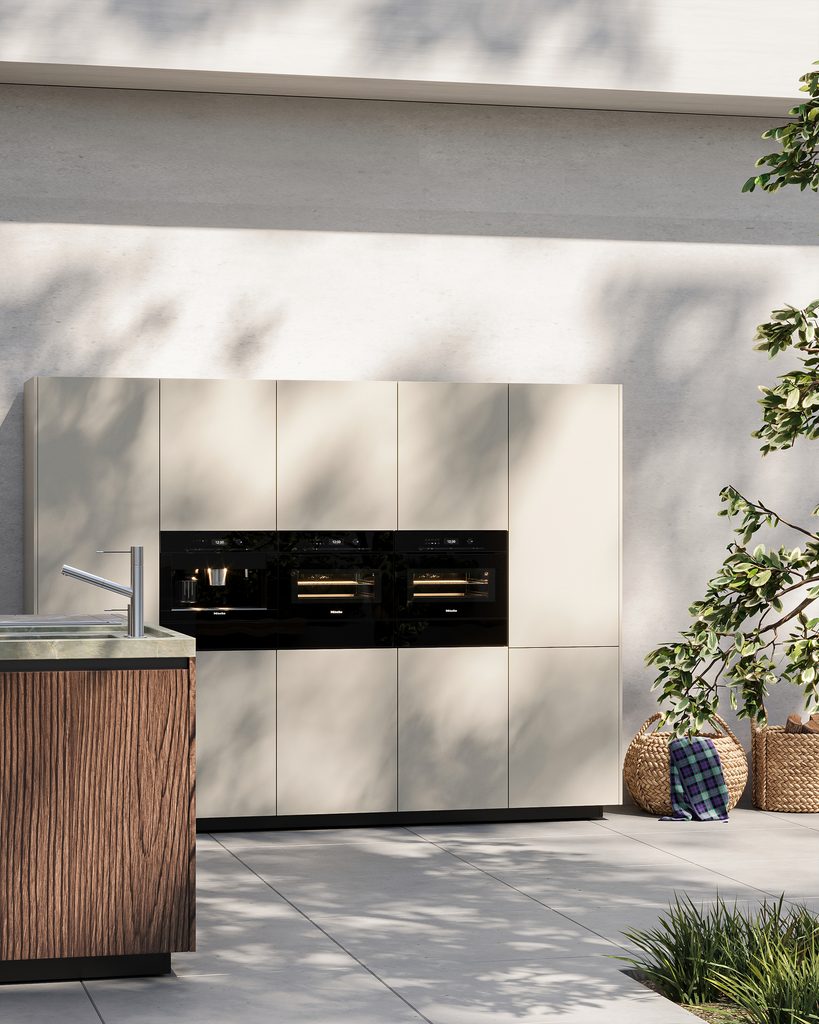
You don’t need to have all of these appliances in your outdoor kitchen, prioritise the ones you will need regularly. Be sure to check that they’re suitable for outdoor installation and have the required clearances and ventilation.
Outdoor Kitchen Storage
The amount of storage your outdoor kitchen needs depends on how often you plan to use it and what you use it for.
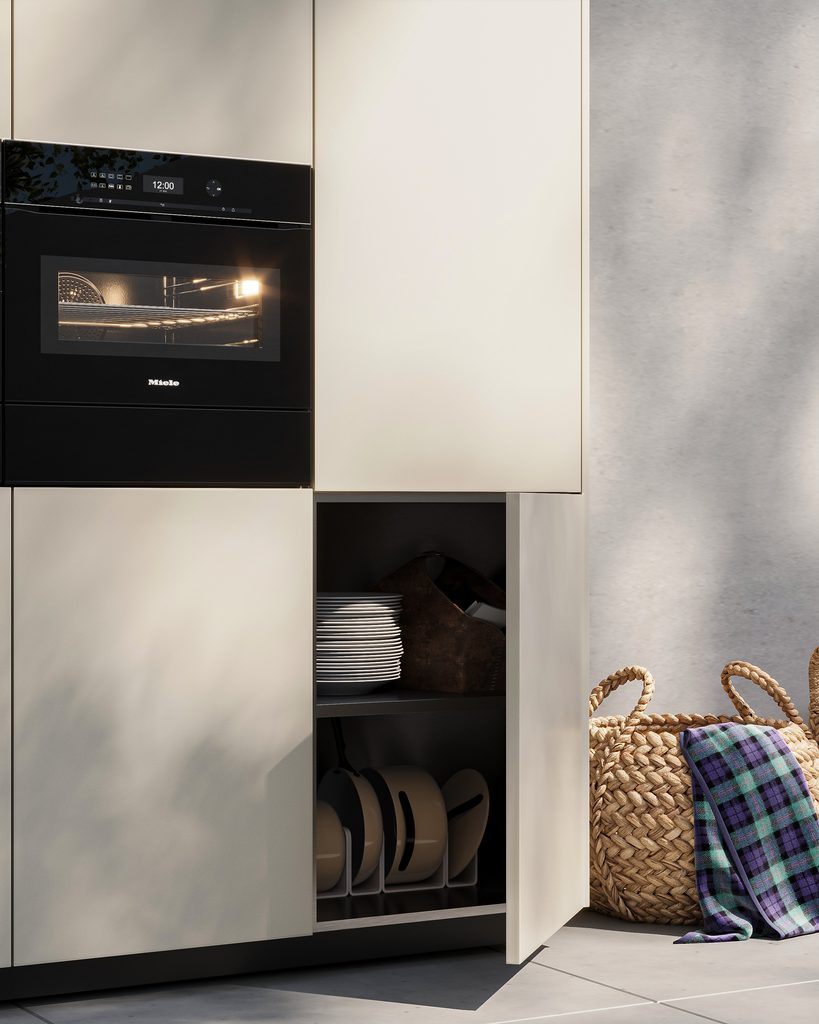
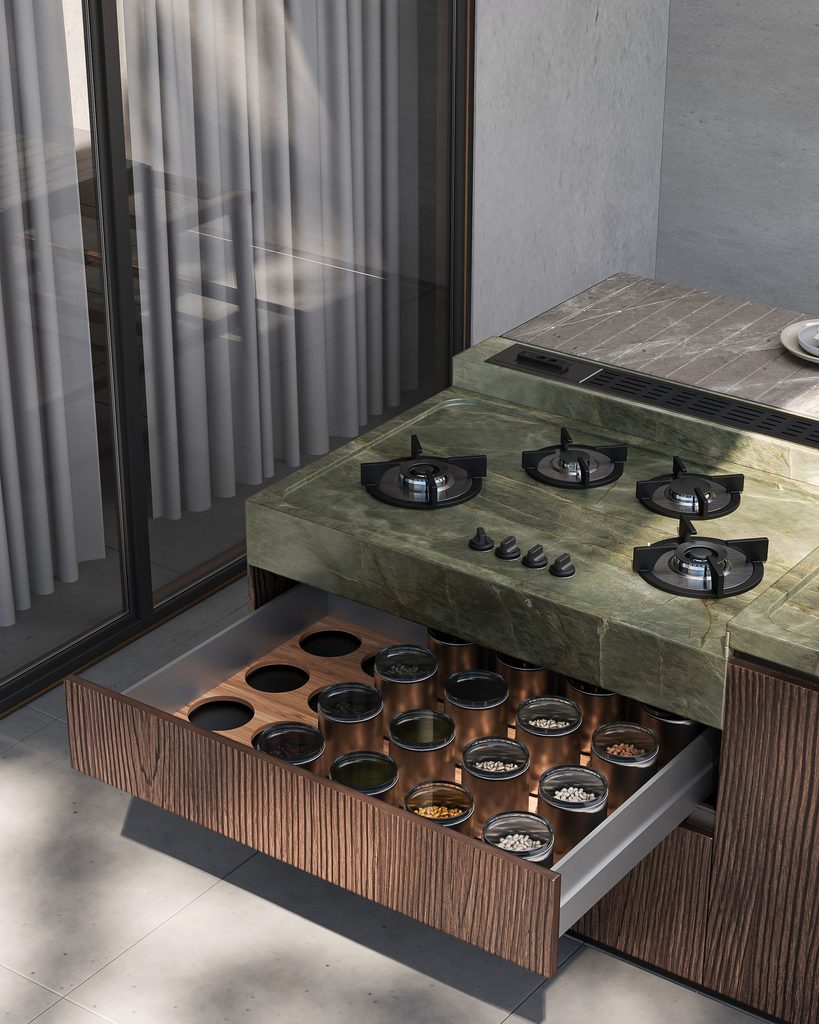
If you mainly use it for grilling, barbecues and parties, a few deep drawers for pots and larger utensils, along with smaller drawers for cutlery, may be enough. You can keep cookware used for regular cooking in your indoor kitchen.
However, if you plan to use your outdoor kitchen regularly, you will need more storage. Include a mix of cabinets, drawers and open shelves for cookware, utensils and serving essentials.
Utility Requirements
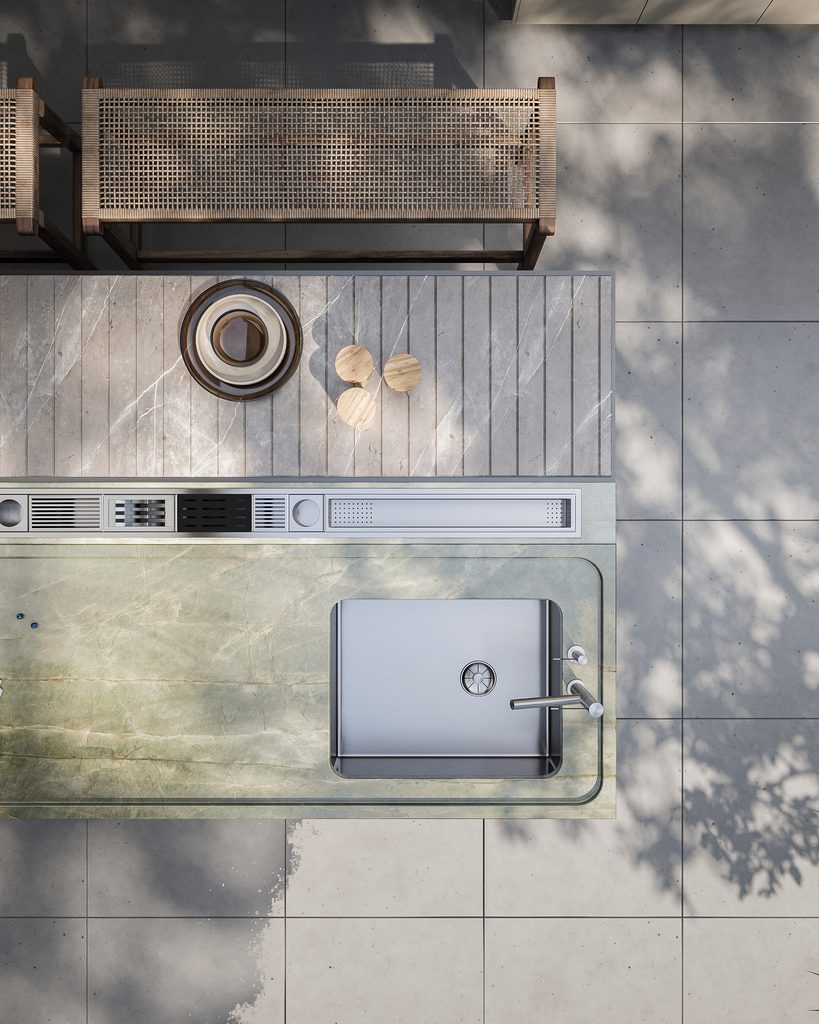
- Water supply: For the outdoor sink.
- Drainage: To carry wastewater away and prevent water from collecting around cabinets and appliances.
- Electrical points: For refrigerators, ovens and lighting.
- Gas connections: For gas-powered hobs and grills, with proper ventilation.
It’s best to consult qualified professionals to ensure everything is installed safely and accurately.
Weather Protection
You can install a pergola, an extended roof or a retractable awning to protect your outdoor kitchen from direct sunlight and rain. It’s best to choose weather-resistant materials like 304-grade stainless steel and finishes that can withstand your local climate.
Final Thoughts
The right outdoor kitchen design depends on your available space, cooking requirements and local weather conditions. Plan the layout, appliances, materials and storage together to create a kitchen that is practical to use and suited to its surroundings.
FAQs
1. Can you use a modular kitchen outdoors?
Yes. An outdoor modular kitchen can include cabinets, worktops, appliances and storage designed for outdoor use.
2. Is 304-grade stainless steel suitable for outdoor kitchens?
Yes. It offers good resistance to moisture and corrosion, making it a suitable choice for outdoor kitchen cabinets. Regular cleaning is important, especially in coastal areas.
3. What is the best layout for a small outdoor kitchen?
A linear or L-shaped layout works well in smaller spaces. Both make good use of limited space while leaving room for movement.
4. What is the best material for outdoor kitchen cabinets?
304-grade stainless steel is the best option because it resists moisture and corrosion, is non-porous and easy to clean.
5. What countertop is best for an outdoor kitchen?
Porcelain, concrete, granite and other natural stones are popular choices. Consider their resistance to weather, staining and heat before selecting a countertop.
6. What appliances should an outdoor kitchen have?
A hob or grill, sink and refrigerator are useful starting points. You can also include an oven, pizza oven or beverage cooler based on your cooking needs.
7. Does an outdoor kitchen need a roof?
Not necessarily, but a roof, pergola or awning can protect cabinets, appliances and worktops from direct sunlight and rain.
8. How much space do you need for an outdoor kitchen?
It depends on the layout and appliances you choose. Even a compact area can accommodate a cooking counter, worktop and storage with proper planning.
9. How do you maintain an outdoor kitchen?
Like you would with your regular kitchen, clean the cabinets, worktops and appliances regularly to remove dirt, grease and dust.
10. Can you install an outdoor kitchen on a balcony or terrace?
Yes, provided there is enough space and the structure can support the kitchen and its appliances. Of course, you’ll also have to check building regulations, load limits and utility requirements before installation.