
Types of Kitchen Lighting: A Complete Guide for Your Home
Learn about the three main types of kitchen lighting and how to combine ambient, task and accent lights for a comfortable, functional kitchen.
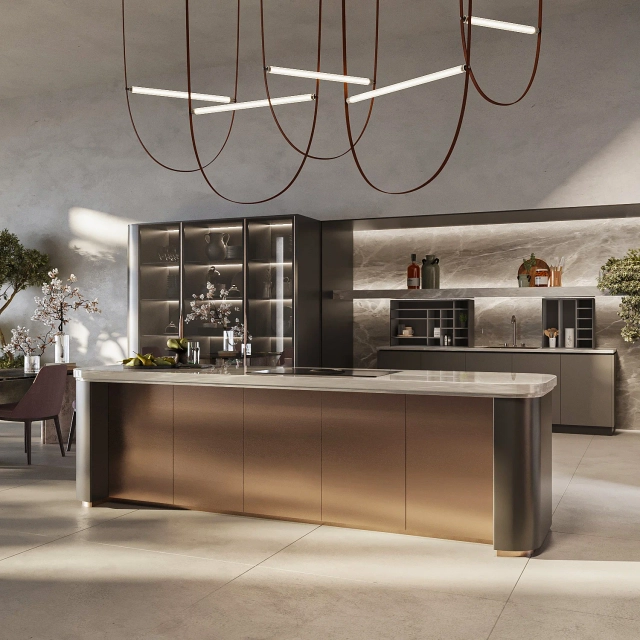
Lighting can define the mood of a space, highlight its best features and make everyday activities easier. In the kitchen, it plays an equally important role, helping you see clearly while cooking and adding warmth and character to the space.
To get the perfect lighting for your kitchen, you have to stop relying on a single ceiling light. The best kitchen lighting combines three different layers of lighting: ambient lights, task lights and accent lights.
When these three layers work together, your kitchen becomes easier to use, more comfortable to spend time in and more visually appealing.
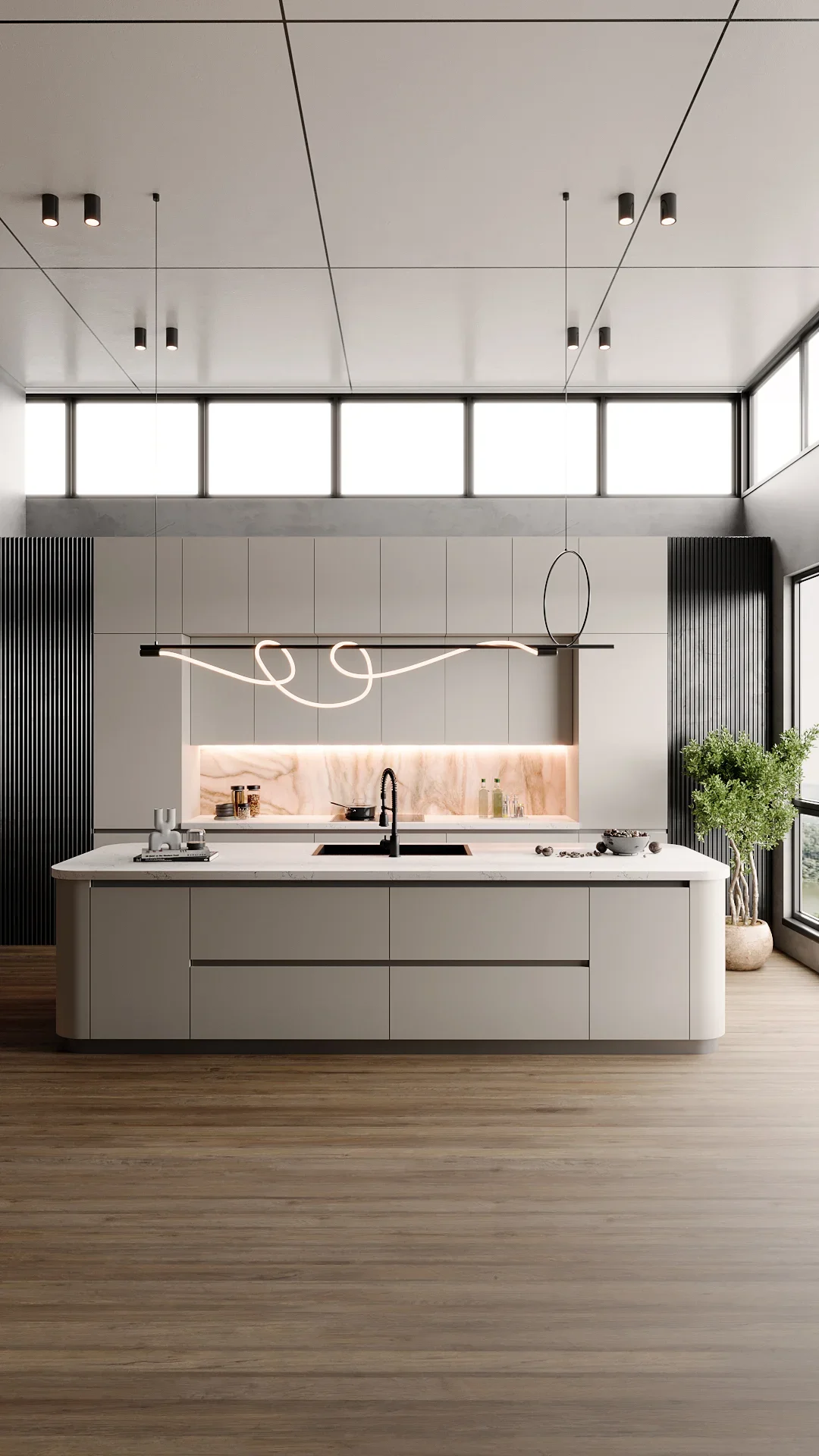
Understanding the Three Layers of Kitchen Lighting
Before choosing individual fixtures, let's understand what each layer does.
- Ambient lighting illuminates the kitchen as a whole.
- Task lighting provides focused light where cooking and preparation take place.
- Accent lighting highlights design details and adds warmth and personality.
These three types aren't competing with each other. They complement each other. A ceiling light may provide general illumination, while under-cabinet lighting brightens the countertop and pendant lights over an island add both function and visual interest. By layering these three lights, you get a kitchen that feels balanced rather than overly bright or shadowy.
1. Ambient Lighting: The Foundation of Your Kitchen
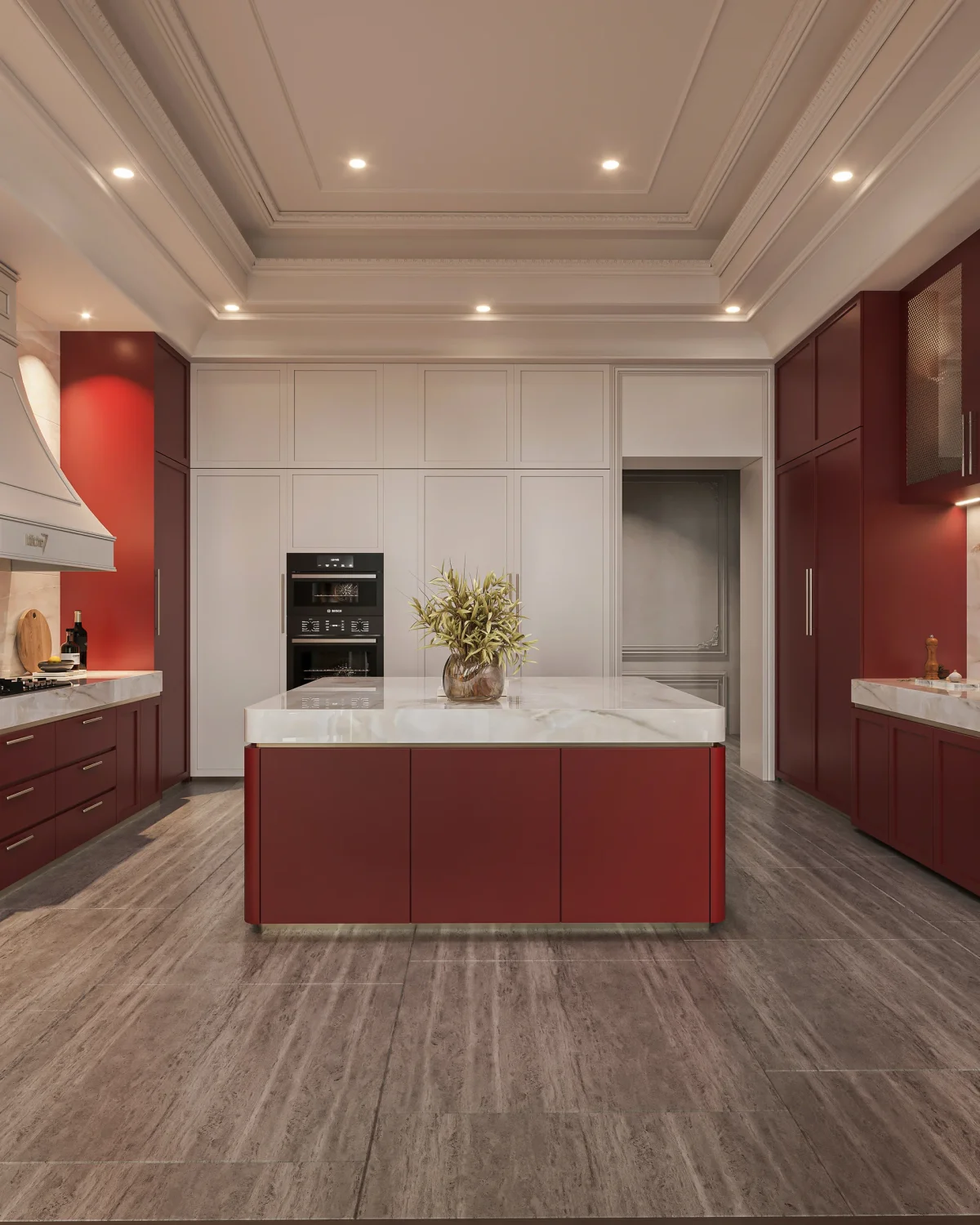
Ambient lighting is the main layer of illumination. Its purpose is to provide comfortable, even brightness throughout the kitchen so that you can move around and use the space safely.
Best options for ambient kitchen lighting:
- Recessed lights are a popular choice for modern kitchens because they provide clean, unobtrusive illumination. They can be positioned across the ceiling to distribute light evenly.
- Surface-mounted ceiling lights are another practical option, particularly where recessed lighting isn't suitable. They are available in a variety of contemporary and decorative designs.
- Ceiling fixtures can also become a design feature in larger kitchens, especially when the kitchen connects directly to a dining or living area.
The key is to avoid concentrating all your light in the centre of the room. A centrally positioned ceiling fixture can leave countertops and work areas in shadow, especially when you're standing underneath it. Instead, think about where people actually use the kitchen and distribute your ambient lighting accordingly.
2. Task Lighting: Light Where You Work
Kitchen tasks require clear and focused illumination. Chopping vegetables, washing dishes and preparing your dish all become easier when the work surface is properly lit.
This is where task lighting becomes essential. Task lighting can be divided into two distinct categories:
1. Under-Cabinet Lighting
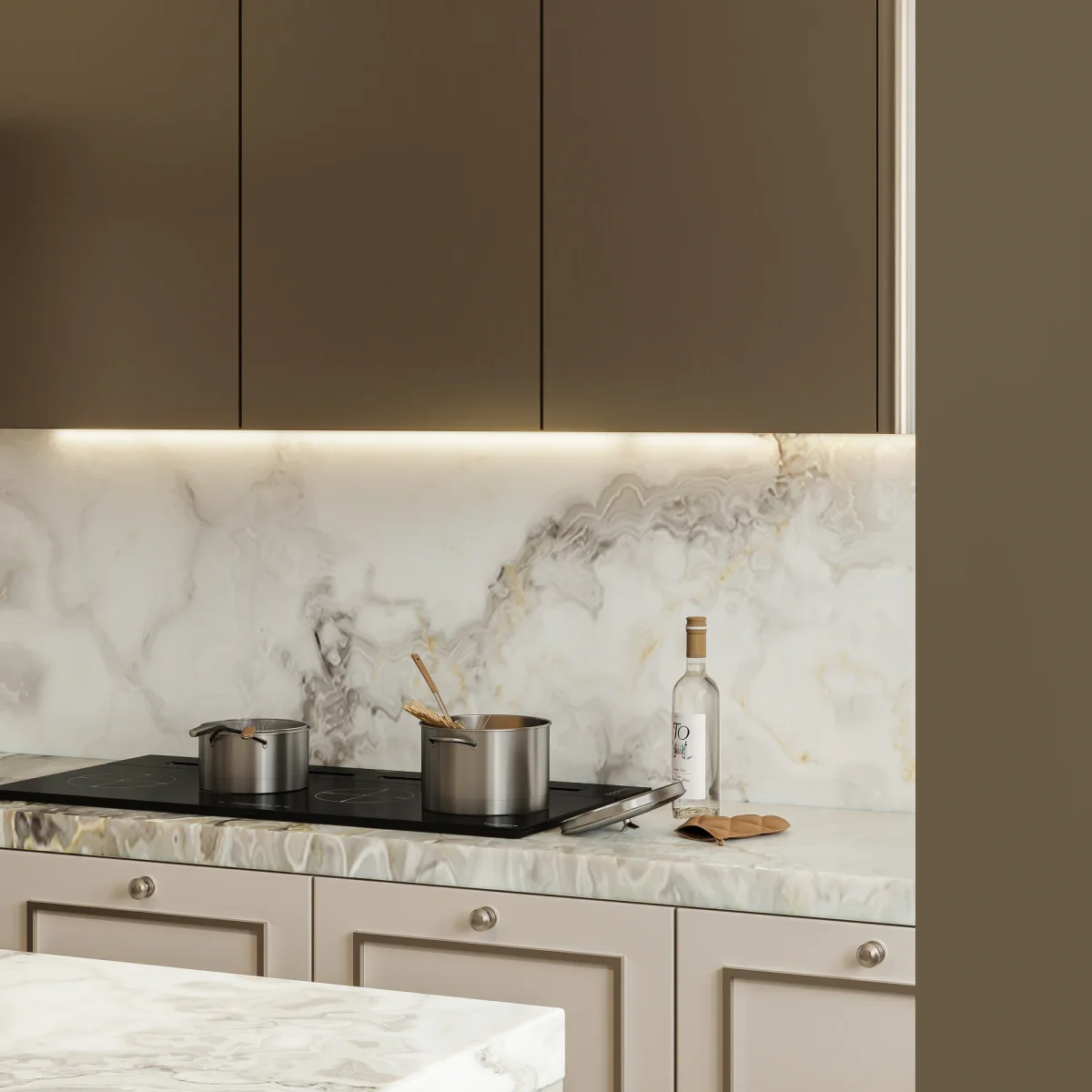
Under-cabinet lights are one of the most useful additions to a kitchen. Installed beneath wall cabinets, they illuminate the countertop directly and help reduce shadows created by overhead or ceiling lights.
They are particularly useful above:
- Kitchen worktops
- Sinks
- Breakfast counters
2. Pendant Lights Over the Island
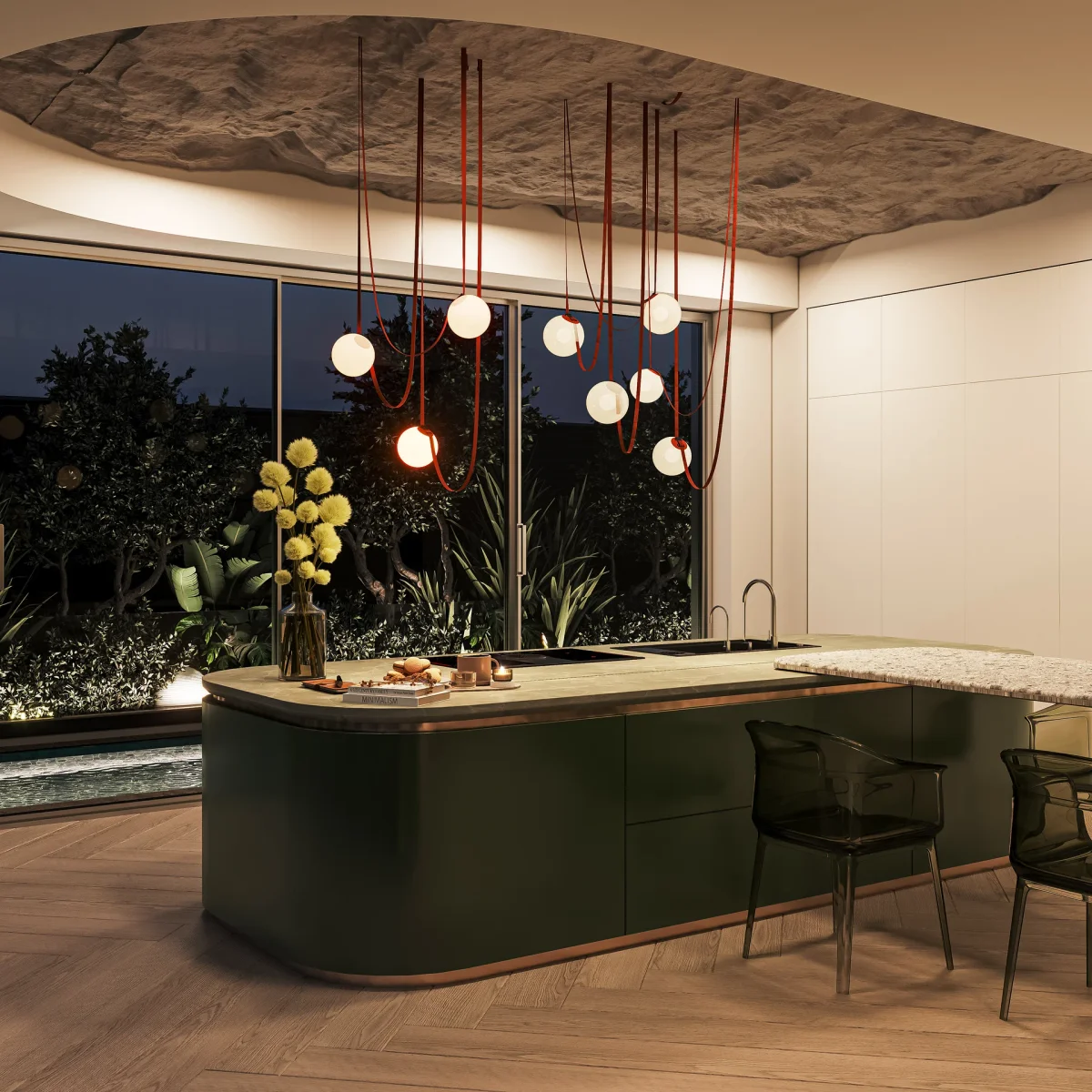
If your kitchen has an island or breakfast counter, pendant lights can provide focused illumination while also becoming an important decorative element. They work especially well because they bring the light source closer to the surface you're using.
For a larger island, multiple pendants can create a balanced composition. For a smaller counter, a single well-proportioned pendant may be enough.
3. Accent Lighting: Add Character to Your Kitchen

Once the functional lighting is in place, accent lighting can give your kitchen its personality.
Accent lighting isn't primarily about making the kitchen brighter. Instead, it draws attention to particular features and creates depth.
You can use accent lighting to highlight:
- Open shelving
- Glass-front cabinets
- Decorative backsplashes
- Architectural details
- Display areas
- Kitchen artwork
- Statement materials and textures
For example, a subtle LED strip inside an open shelf can turn everyday crockery into a decorative feature. Similarly, carefully positioned lighting can bring attention to a textured backsplash or a beautiful stone countertop.
The goal is subtlety. Accent lighting should enhance the kitchen rather than overpower it.
Don't Forget Colour Temperature
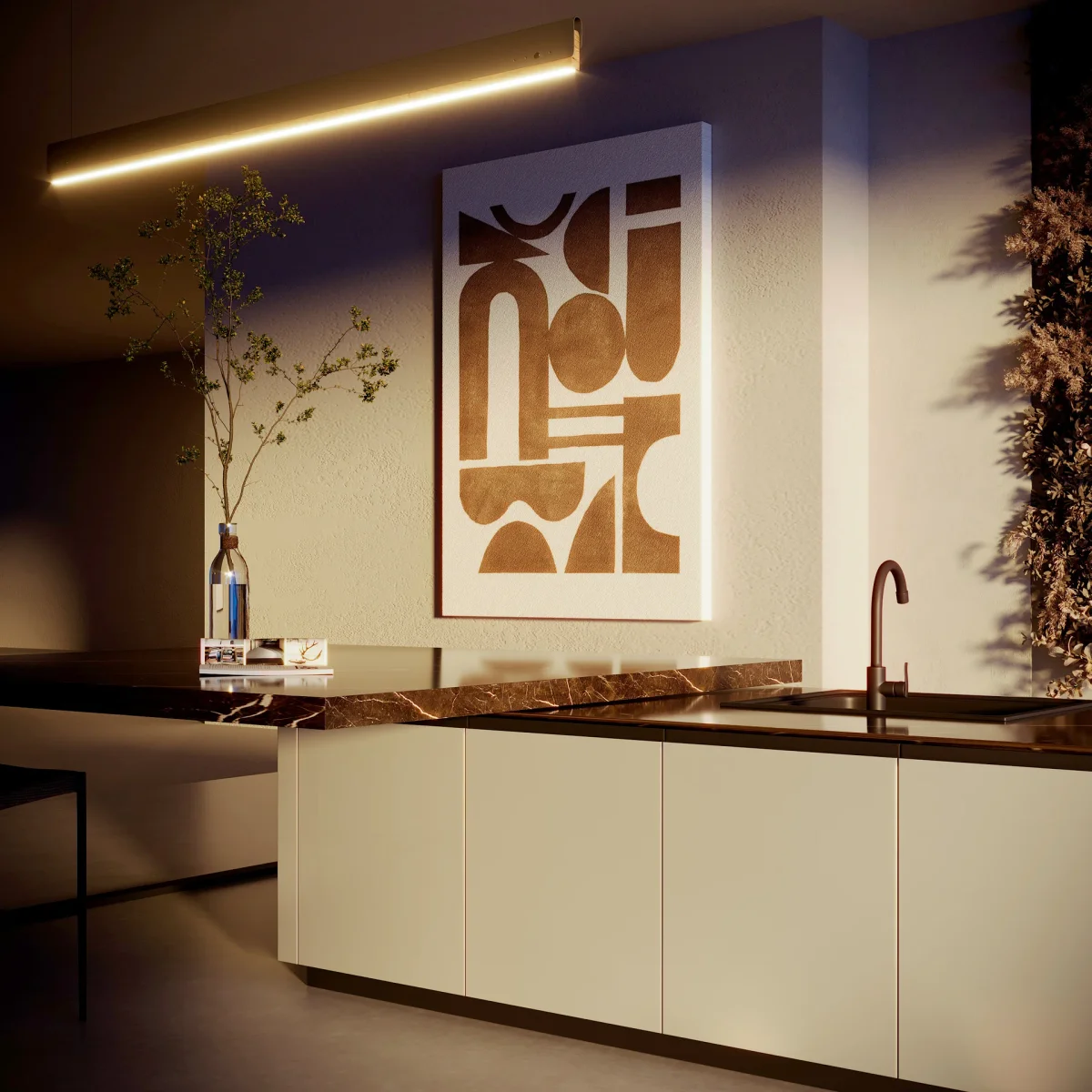
The colour of your kitchen lighting can change the mood of the entire space. Cooler lights create a crisp, clean look and work well in task-focused areas, while warmer lights add a softer feel and pair well with wood, brass and other warm finishes.
Dimmers give you more control throughout the day. Use brighter lights when you're cooking or preparing meals, then lower the intensity when you're dining or entertaining.
When choosing your lighting, consider your kitchen's materials, colours and how you use the space. The goal is to balance good visibility with a comfortable atmosphere.
Final Thoughts
Good kitchen lighting is about creating the right light for every part of the space. Start with ambient lighting, add task lighting where you work and use accent lighting to highlight key features.
With the right balance, your kitchen can be practical, comfortable and inviting, whether you're cooking, dining or entertaining.